Saturday, August 30, 2014

Diary of Musical Thoughts Podcast Episode 20

"Some of them in the name of national self determination founded their own mixes", 75 min

I've been sitting on this mix for about four months, and at the time I wasn't completely sure what I wanted out of it, besides something new to listen to on an upcoming plane ride.  I was aiming for something mellow, but not particularly spacey and chilled to minus-40 like the last podcast (Episode 19).  The Lustmord, Jacaszek, Ishay Adar, and John Massoni/Sonic Boom discs were new purchases, and new discs provide my typical excuse for making mixes.  The entire tracklist was pretty much improvised.

Somehow, out of this vagueness of purpose, came a nearly perfect mix.  Whatever it is, I don't think I could have done it any better, if that makes any sense.

What I remember most about making the mix was my stunned reaction to Talk Talk's "I Believe In You" and how the mix nearly fell apart completely after that because I had no clue how to follow it up.  That might be the last time I look to "Spirit of Eden" during an improvised mix.  If you're thinking that the John Massoni/Sonic Boom track sounds like a chance to catch one's breath before the mix shifts gears into something with a more aggressive pulse, you're right.  


Friday, August 15, 2014

Woob, "Lost 1194"

Bob Dylan's "Bootleg Series" albums have been huge hits with fans because they allow them to take a peek behind the curtain, offering insight into creative process of an artist who has always been somewhat shadowy about what he does and how he manages to do it.  We can hear how tracks developed through demos and live versions.  We've heard acoustic tracks go electric, electric tracks take on new life during live revues, and the unearthing of songs from his ignored or underappreciated periods.  The series is still going strong after twenty years.

If only we could open the recording vaults for electronic musicians too (no, the "bootleg series" equivalents for them are not remixes).  I'm not comparing Woob's catelog to Dylan's much more extensive one, but for  whatever reason, he seems to be at the forefront of prominent 90's electronic artists revisiting/reworking their material ten or twenty years after the originals.

Much like "Repurpose",  his earlier trip into the vaults, "Lost 1194" does pack many surprises or relevations.  Overall it's a bit heavier on beats and percussion -- the long intros to "On Earth" are scaled back and the dubbier portions extended on "Lost On Earth", and the final portion of "Lost Odonna" adds a drum part that was missing in the original.  Many of the samples are different, which doesn't affect the final product much, with the exception of the bone chilling screams that shifted "Strange Air" into a nerve-wracking deep freeze that are missing in "Lost Strange Air".  Only "Lost Emperor" serves up a different mood than its corresponding original.  Rather than the swampy hell of the bass heavy original, "Lost Emperor" seems tranquil, taking its cues from Eno's early ambient work rather than dub.

The key thing I've learned, having now heard both "Repurpose" and "Lost 1194",  is that "Woob 1194" may be the biggest fluke in electronic music history.  The alternate takes and everything Frankland has done since then (e..g as Journeyman) can't come close to what he captured live, with no editing, when he recorded "Woob 1194".  It gives me a greater appreciation of how difficult it is to come up with quality live improvisations and mixes night in and night out, and how important it is to know your music inside and out, let your instincts guide what you're doing, and record almost everything you do.  The stuff that spills out of you, seemingly without trying, may be impossible to duplicate no matter how hard you try.  

Monday, August 04, 2014

It’s Time to Revisit All 38 Soundtracks to Hit No. 1 Since "Purple Rain"

The title is rather self-descriptive, and call me crazy, but this is my favourite bit of music criticism of the year thus far.  Kudos to Dave Holmes.  It's not too often that the most insightful lines in a music article are consistently the funniest as well.

Breaking down the list further, we can see that the distribution of these 38 albums has been highly irregular:

1985-1989 (six albums, 44 weeks at #1)

Each of these albums was a cultural phenomenon and their core songs remain staples of "do you remember the 80's?" compilations up to the present day.  Multiple songs from each of these soundtracks dominated pop radio at the time and each was responsible for making at least one or two careers.  In the case of "Dirty Dancing", nearly everyone who appeared on it had a first or second career that they owe almost entirely to the soundtrack.  There was even a "Dirty Dancing" tour, featuring the performers and music from the soundtrack, and an accompanying live album from the tour.  And you thought this kind of brand-name cash-in started with the "American Idol" and "Glee" summer tours?
 
1990-1991 (zero albums)

Just like that, the soundtrack album gravy train dried up.  It's not clear why -- were Vanilla Ice and MC Hammer really so invincible?  The "Pretty Woman" movie and soundtrack were huge hits in 1990, and Roxette's "It Must Have Been Love" hit #1 on the pop charts, so maybe the lack of #1 soundtracks in these years is just a fluke, rather than a shifting of the guard, especially since ...

1992-1998 (sixteen albums, 72 weeks at #1)

Yep, soundtracks were back.  There's no bunching happening here either, these albums are uniformly distributed over these six years.  This works out to an average of four weeks at #1 per album, but that's misleading because six of them were in the top spot for just a single week, and four others were #1 for exactly two weeks.  Most of the rest were mega-gigantic blockbuster hits with radio exposure to match, especially "Titanic" and "The Bodyguard".  This is just further proof that although some people remember the 90's as a time when alt-rock and nu-metal were dominant, the truth is that sappy soundtrack ballads in the vein of Berlin's "Take My Breath Away" never went away, and were in fact bigger than ever.

1999-2001 (zero)

I'm not sure what happened here, but I took a closer look at 1999, and it was a weird year for music.  Teen pop, country, nu-metal, and hip-hop swapped in and out of the #1 album spot without any rhyme or reason.  As for soundtracks, there was almost nothing of note.  I suppose the most significant was the "Austin Powers II" soundtrack and it's radio hit, Madonna's "Beautiful Stranger" (Lenny Kravitz's "American Woman" also performed well).

2002-2003 (three, 10 weeks)

"8 Mile" was a phenomenon because Enimen was an unstoppable commercial force, and "O Brother Where Art Thou?" may have been the most unlikely Album of the Year Grammy winner ever, but otherwise you can't really say that soundtracks made any kind of comeback in these years.  

2004-2005 (zero)

Again, I can't find any notable soundtracks in these years.  There were a lot of #1 albums in 2005 -- a majority of them spent only a single week at #1, so you know that soundtracks were ice cold if not a single one could ride a big opening weekend into a first week sales boost and a short stay at #1.  The most notable soundtrack in these years would appear to be "Hustle and Flow" and its Oscar-winning track "It's Hard Out Here For a Pimp".  Yeah, yeah, here's the link.  Enjoy.

2006-2013 (twelve,17 weeks)

Soundtracks came back over night, thanks to Disney successfully targeting the tween demographic and young adult fiction making a jump to the big screen ("Hunger Games", "Twilight" saga).  There were plenty of dead spots for soundtracks during these eight years, and most of these albums only spent one week at number one.  Soundtracks were bankable but forgettable.  None of these albums had a huge, breakthrough single.

2014 (one, 14 weeks)

"Frozen" gets its own category because no soundtrack has dominated the album charts like this "Titanic" in 1998.  Every generation has its own Disney soundtrack to call its own I see.

Wednesday, July 23, 2014

Teste, "The Wipe"

Is there a more underappreciated Canadian contribution to techno than Teste's "The Wipe"?  It still appears regularly in many DJ sets, is immediately recognizable to countless techno fans, but how many of them know of its humble Toronto origins?

Count me among those in the dark, that is, until I read Juno's feature on the story behind "The Wipe".  Richie Hawtin broke the track by releasing it on his  Plus-8 label (I first discovered it on the Mixmag Live Vol. 20 compilation, mixed by Hawtin) and it's grown steadily in stature over the years, becoming more influential as it ages.

Techno has been around for long enough to reevaluate plenty of old classics.  How many techno tunes have become steadily more classic as they age?  Underappreciated albums are not uncommon in rock music, people are discovering and rediscovering gems from the past all the time.  In dance music it's usually a different story -- a song becomes a smash hit in the clubs, picks up classic status almost immediately, and appears on a million DJ sets and compilations.  But after a few years, most of those tracks stop getting played and end up out of earshot, out of mind.  There is no classic rock radio equivalent for techno, so eventually twenty years pass and somebody wants to revisit those old tracks in a blog post ...

For example, how many songs from the first Flux Trax compilation are as classic or more classic now than they were in 1995, when the compilation was released?  At the time it was as close to a definitive collection of techno's all-time greatest hits that you were going to find.  And now?  The CJ Bolland, Jam and Spoon, and Empirion tracks have aged horribly and have practically dropped of the face of the clubbing earth to the best of my knowledge.  Others such as Slam's "Positive Education" and Hardfloor's "Acperience" are still remembered fondly but does anyone really feel the need to listen to them anymore?  I would say that the only tracks that have remained stone cold classic throughout the past two decades are "Voodoo Ray", "Energy Flash", "Can You Feel It?", "Loop", and "Strings of Life".  One could also make an argument for "Rez" (Underworld got way bigger long after "Rez", but does anyone really play it anymore) and "Altered States" (one of my all time personal favourites, but it didn't have the impact that many of the other tracks on the compilation had).  Out of those first five, only "Voodoo Ray" feels like it's bigger now than it was at the time (and it was HUGE at the time in the clubs, but now it's huge even among casual electronic music fans who don't remember it from when it was in the clubs).

On the other hand, Hawtin's Mixmag Live mix that I linked to earlier, which was underappreciated at the time and still remains probably the most overlooked Hawtin commercial mix, contains several tracks that have gotten more classic with time.  Octave One and Plastikman were famous then and are still famous now, but "The Wipe" and G-Man's "Quo Vadis" have slowly grown from minor hits into all time techno blueprints over the past two decades.

Friday, June 27, 2014

The "lost" Caustic Window album

No matter how much of a fan you think you are, there's always somebody out there who relates to the music more passionately than you, is willing to run the mailing list and/or fan site more than you, or pay $46 000 for a one-of-a-kind vinyl album more than you.

Fans of 90's electronica remember hearing the fables about dozens of unreleased Aphex Twin albums supposedly locked away somewhere, all of them supposedly mind-blowing according to the likes of Mike Paradinas (mu-ziq) but relegated to the closet by the perfectionist R.D. James himself.  Have the archive doors finally been blown open?  It's hard to believe that the likes of Prince relented years ago and agreed to release his archived work, while Aphex Twin stubbornly refused to budge.

The album is streaming in several places on the internet.  Fans of "Selected Ambient Works I" will surely love the opener, "Flutey", as it's overall mood and sonic palate are virtually identical. On the other hand, "Stomper 101mod Detunekik" (love the name -- has to be the name of a patch he put together just for this track) and "Popeye" recall the vacuum cleaner rave music of the early 90's done up Aphex style with dreamy ambient synths lurking in the background.  "Afx Tribal Kik" seems to be a stab at ethno-techno done for a bit of a laugh, but it actually comes across as a killer demo of sorts for Polygon Window's all-time classic "Quoth".  "Airflow" brings things back toward "SAW I" again, only to careen back into pure WTF-ness with the biggest oddity of the album, the acid-cum-italo house "Squidge in the Fridge".  "101 Rainbows (Ambient Mix)" might be the biggest find of the album, a collision between then-contemporary ambient house and the melodical precision of Krautrock, like Cluster and the Orb collaborating at the height of their respective powers.

As a compilation of odds and sods, the album makes sense, as many of these experiments wouldn't have blended into his other albums.  You can almost imagine Richard James' thought process on every track ... "now I want to see if I can make my style work with (insert esoteric genre name) ... eh, not bad, maybe I'll tweak it a bit later (*files track away and doesn't play it for twenty years*)".  I doubt that it will blow many minds, but it will certainly remind people of why they were such big Aphex Twin fans in the first place.


Monday, June 16, 2014

Casey Kasem RIP

It's been a rough couple of days for celebrity deaths (Tony Gwynn??  No...) and it's good to see that Kasem is getting the respect he deserved in death, seeing as the end of his life appears to have been anything but pleasant.  His family feuding over his estate and his wife allegedly holding a senile Kasem prisoner in their home will hopefully be forgotten -- a sad end to one of the great lives in pop music history.

Chris Molanphy captures the essence of Kasem perfectly in his piece for Slate.   It's true, he unashamedly loved pop, even when it wasn't exactly popular to do so.  Chart nerds could salivate over how he'd phrase a dramatic jump from #5 to #3, making it sound like a titanic newsworthy event without hardly ever raising his tone of voice.  I grew up watching "America'sTop 40" on TV every Saturday and rediscovered Kasem (in a way) on radio in the late 80's when I would listen to the countdown in full nearly every week.  I listened to and recorded his broadcast of the top chart songs of the 1980's and relistened to it incessantly in the 90's, it was one of my personal all time favourite radio moments.

As Molanphy explains, Kasem's true talent was that he was a storyteller who rarely came across as a hype-fueled DJ paid by record companies to plug the week's most popular music.  He humanized the artists in a way that DJ's and even many journalists rarely do, and his stories were so vivid I could often picture myself in the room while the music was being created.

Saturday, May 24, 2014

"20 Feet From Stardom", dir. Morgan Neville

There are plenty of impressive things about this documentary.  The celebrity roll call, which includes Sting, Stevie Wonder, Mick Jagger, and Bruce Springsteen, is eye opening to say the least.  The big celebs speak better to the importance and admiration for the background singers than the background singers themselves do, which in a roundabout way, turns out to be the single biggest weakness of the film.

This film came off like a series of disjointed interviews that relies on name dropping and the aforementioned star power to make its case.  The irony of the background singers (who in large part, for various reasons, couldn't make it as solo artists) needing their superstar friends to tell their story for them seems to be completely lost on the director.

The film floats several reasons why they never became stars in their own right.  Many simply loved their roles as background singers and had little desire to do anything else.  Others were afraid, or lacked the confidence to stand centre stage, and learned to accept their background role.  Yet we also see them getting singing duets or even getting featured solos as part of stadium tours, and writing songs for the breakthrough solo album that may never get recorded.  So which is it?  Are they missing the "charisma gene" (as implied by Springsteen) or is a matter of never being afforded the opportunity to shine by a myopic music industry?  The movie never takes sides, but it really should have.  Documentaries should have a point of view.  Beyond the obvious degree of admiration for what they do, I left the theatre not having a clue how the director really felt about most of these people.

The highlights include Merry Clayton's story about getting woken up in middle of the night and called in to record "Gimme Shelter" with the Rolling Stones, and every scene featuring Darlene Love.        

Short aside: in the pre-film lecture by Yashiv Cohen, which focused on the gospel roots of soul and R&B, I realized that there's not much of a leap between The Soul Stirrers' "I'm a Soldier" and The Velvet Underground's "Heroin".  At the risk of sounding silly and ignorant, has this drone rock gospel been hiding in plain sight all this time and I didn't realize it?

Thursday, May 22, 2014

Music in Vienna (May 2014 edition)

No radio alarms and Irish pubs this time, just great shopping and two incredible concerts.

At a time when music shops are an endangered species just about everywhere, I was happy to see that all the shops I visited six years ago are still in business.  I even stumbled across a couple of new ones (new to me at least). 

The results were a bit different however.  Rave Up Records carried more punk and indie rock than I remember, and the new stores (including Record Bag) were also heavy on punk and metal.  Scout Records is packed with records and discs from floor to ceiling, with boxes piled upon boxes upon racks of CD's, crates underneath tables and discs hanging on the wall. It's the kind of place that will cease to exist when the 70's and 80's punks and jazz aficianados leave the music business, so enjoy it while you can.  Musik und So's stock seems to have shrunk considerably (IIRC), but you can still buy plenty of great CD's for one Euro or not much more.  I bought the 2CD reissue of The Cure's "The Head on the Door" (an album I never owned in any format) for just nine Euros. 

The most worthwhile stop was at Substance.  Not only have the prices in Vienna leveled off and even fallen below those of other major European cities (e.g. Milano), but Substance is now undercutting their competitors in the Viennese electronic music market, which I definitely don't remember to be the case last time.   I had to put back several amazing CD's to justify the total expenditure to myself and keep the total cost under 100 Euros.  I grabbed a ton of great stuff, including last year's Haxan Cloak album that I'd been meaning to check out for ages, the new Voigt and Voigt, a not so new Emeralds disc for a great price, and a few more. 

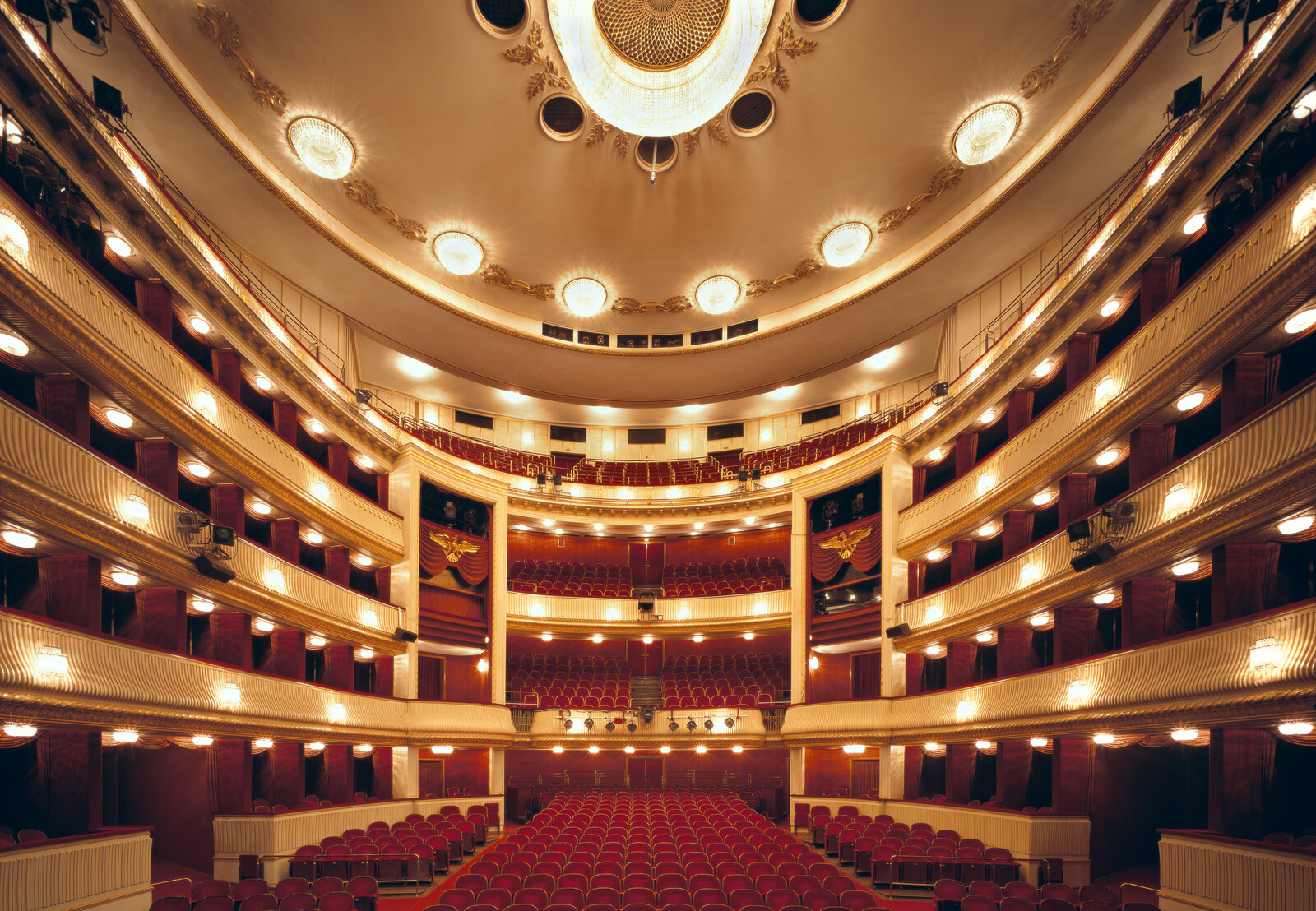
The concerts were great but the venues were even better.  The Musikverein is the home of the Vienna Philharmonic and it's not clear to me how a box shaped venue could have such exceptional acoustics.  The abundance of wood as opposed to steel is a big part of it, but beyond that I'm stumped.  Its main chamber is called the "Golden Hall" for obvious reasons -- it's a sensory overload of shimmering gold, glistening wooden beams, and regal paintings.  Beethoven's "Egmont" Overture has long been a favourite of mine despite a lifetime of not liking opera, but his Piano Concerto No. 3 is not (too many frilly runs) although soloist Rafal Blechacz's playing could not be faulted.  The highlight, by far, was Stravinsky's "The Rite of Spring" -- a piece I'd always appreciated for its historical importance but couldn't bring myself to like.  Hearing it played by a full symphony orchestra changed that.  All its unusual rhythmic shifts felt natural when you can react along with the notes while watching the orchestra attack the piece, and the pounding of the drums ring in the ears and enhance the experience far beyond what you would normally experience on disc.

The Burgtheater (National Theatre) is another stunning building that I felt privileged to visit.  The organizers of the Wiener Festwochen (Vienna Festival) deserve a round of boos for their arcane rules for ticket collection and distribution, and for selling tickets with partially obscured views of the screen without any regard for fair pricing.  I sat in the centre section on the first mezzanine level and every seat in that section, save for the pairs of seats in the corners of the last row, were sold at the same price.  However, at least one third of them (including mine) had partially obscured views due to the low hanging ceiling or sharply angled side walls.  It's fine for a play, when you don't need to see much more than the performers on stage, but for a 3D Kraftwerk concert, it's an inexcusable promotional mistake.  I think many people in the side balconies and the upper mezzanine would have had similar problems.  In my section, there was a fair bit of seat reshuffling, as people preferred to sit in the aisles while the people in the back rows moved down to take their seats or used the extra space to recline and find better views.

Once I found a way to deal with these issues, I could start to properly enjoy an otherwise excellent concert. 

My decision to choose the "Trans Europe Express" concert deserves a bit of explanation.  There wasn't much question about it really.  TEE has always been my default choice for my favourite Kraftwerk album.  Of equal importance, songs from "The Man Machine" and "Computer World" have been the basis of their live sets for years, whereas most songs from "Autobahn", "Radio-Activity", and TEE have been rarely played over the past two decades, if ever.  If you're going to a special event that only takes place in a select few cities, why choose to hear the same songs you can hear in nearly all their regular concerts? 

After buying the tickets to the show, I listened to TEE (of course) and heard things I'd never heard before.  Over the past several years, I found myself listening to the modern, reconstituted touring band version of Kraftwerk (e.g. the "Minimum Maximum" DVD or other recent live shows) far more than the original albums.  During a rare airing of Kraftwerk as they were thirty seven years ago, for the first time, TEE sounded weak, tinny, and lacking in punch.  In contrast, "The Man Machine" has a lot more in common with contemporary electronic music -- funkier, more precise, more metronomic.  This is where they first because The Robots and adopted a style and image that they'd carry with them more or less for the rest of their career.  However, "The Man Machine"'s streamlined efficiency is also its biggest fault.  Everything is too ordered, not a note is out of place, and there's not the slightest air of whimsy or improvisation.  TEE is more varied, more cerebral, and its highs are a lot higher.

TEE is the last album where Kraftwerk's roots as a jazzy improv outfit are central to the music.  It's their final attempt at preserving and advancing the style of music they broke through with.  After that, the pressure to evolve was too strong and there was no way to push the old style any further.  It was time to transform into something else.

For some reason, this kind of album turns out to be my favourite for a lot of notable artists.  Other albums fitting into this category include Depeche Mode's "Violator", Stereolab's "Mars Audiac Quintet", and PJ Harvey's "Rid of Me".  They are the last albums of those bands' "original" style before they quickly morphed into something else entirely. 

On that night at the Burgtheater, even their playing seemed like a throwback to the old days.  In order to play these old songs they needed to go back to being what they once were.  I could see Ralf Hutter playing the chords to "TEE" (the song) on his keyboard.  Kraftwerk looked like performers again and less like office workers who would prefer to send their robots on stage to do the work for them. 
In fact, a quick check of the "Minimum Maximum" DVD shows that their live setup hasn't changed much.  Although their work stations once had monitors that blocked the audience's view of what they were doing, in some shots you can see that they still had the same keyboards and effects modules, and you can see them physically playing the notes if you look carefully enough.  But in Vienna in 2014 -- perhaps due to the venue or the set list --  Kraftwerk's world looked and sounded different for the first time in a long time.   


Saturday, May 10, 2014

Fennesz, "Becs"; Swans, "To Be Kind"

Two new albums from acts with inimitable styles, returning to their noisy, bludgeoning ways that they abandoned years ago.  The end results, however, are drastically different.

The newest album from the reborn Swans is the heaviest, most industrial music they've done since the 80's.  "The Seer" was almost overwhelmingly massive, but "To Be Kind" somehow finds a way to shift into a higher gear.  At times it's almost too much -- they've gotten the point across but keep blasting away behind all sense and sanity, until it all finally makes sense again and you're ready and willing to endure even more of what they have to throw at you.  "To Be Kind" and especially the 30-minute centrepiece "Bring the Sun/Toussaint Overture" are the best examples of how relentless this album is.  Up until now, if I wanted to hear Swans bathed in the metallic shards of their own sweat like these, I had to listen to crappy sounding bootlegs from the 80's.

"To Be Kind" is more "rock" than "The Seer".  On the last album they relied on experimental collage pieces to fill up the two hours and give the listener a break, but "To Be Kind" is nothing but heavy and heavier, all the time.  And believe it or not, these two hours flies by a lot quicker that they do on "The Seer".

-------------------------------------

"Becs" is pretty much a noisier carbon copy of "Endless Summer".  You could say that Fennesz was also looking to take his music to a sort of extreme, but whereas Swans looked at their last album as a stepping stone for something biggeer, Fennesz approached "Becs" like he was doing a remake of "Endless Summer" with extra static tossed in.  The starting point even could have been a low quality rip of "Endless Summer" that sounded so scratchy and distorted that he decided to use that awful sounding source as inspiration for the sequel.  For the most part it works, because anything this reminiscent of that album can't help but be mostly good.  Only the title track manages to hit the legendary sweet spot where the Beach Boys meet distorted guitar and frayed electronics in front of a sun that never sets.  

Friday, May 09, 2014

Diary of Musical Thoughts Podcast Episode 19

"A Swedish mix marched within sight of Vienna", 78 minutes

I've been wanted to record an ambient mix for quite a while ... not a down tempo mix with ambient parts, not a noisy, experimental blast of sound, but a real blissed out mix that would gently drift by as you stopped to take it in.  So I set aside a few tracks, planned out the set order, and stuck with the plan almost until the end, when I couldn't help but improvise a more energetic ending.

I am less high on this mix that I was when I recorded it about two months ago, but that's probably a reflection of the season.  This is a late night, winter mix, not a sunny summer afternoon one.