Tuesday, December 23, 2008

Top 11-20 albums of 2008

I had only planned to compile a top ten this year, but Matt from Cave 17 wrote and requested a top twenty for the website's end-of-year list* (he was nice enough to include me even though I'm a lazy bastard and hadn't written for Cave 17 in ages). Since the second half of the list only exists because of Matt, I wrote my commentaries in haiku form (if you don't understand the reasoning, don't worry about it, just enjoy the haikus).

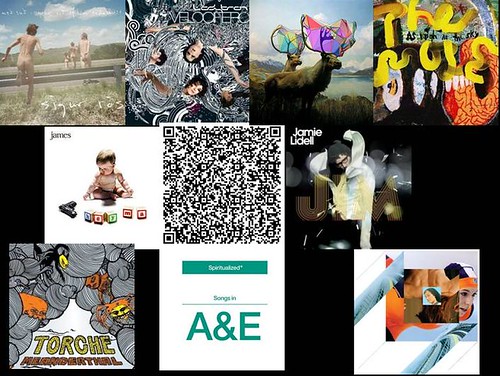
11-20 montage

11. Sigur Ros, "Med sud i eyrum vid spilum endalaust"

Bouncy pop music
Rollicking pianos too
Who would have thunk it?


12. Ladytron, "Velocifero"

Ned Raggett was right
They all go goth in the end
Big layered goth tunes


13. Pyramids, "Pyramids"

Shoegaze and metal
Always made for each other
Pyramids know this


14. The Mole, "As High As the Sky"

Disco disco yes
Disco disco disco yay
Baby you're the one


15. James, "Hey Ma"

Who invited these
Guys to the party this year?
Y'all forgot 'bout James


16. Various, "Depth Perceptions Vol 1" (Pronounce)

Watery dubbed out
Techno goodness won't grow old
As long as I'm here


17. Jamie Lidell, "Jim"

Stereolab went
Halfway Motown this year but
"Jim"'s not hedging bets


18. Torche, "Meanderthal"

If Grohl could rock out
Primordial sludge like this
I'd be more a fan


19. Spiritualized, "Songs In A&E"

Jason's gone folkie
I miss the real J. Spaceman
Drug druggy mainline


20. Growing, "All the Way"

Noisy squiggles latch
Into your skull without end
Really quite pleasant


* dare I say, with more than a hint of bias, that the resulting list is one of the most unique critics lists of the year? Although I'm ashamed to say that the only albums I heard from it were the ones I voted for and that blech-y TVOTR record -- there was plenty of music that I didn't get around to this year, but not yet hearing the Solange and Erykah Badu records despite the recommendations from the Cave 17 guys and their like-minded peeps was fairly inexcusable.

Saturday, December 20, 2008

Top 10 Albums of 2008

OK, on with it:

10. Wold, "Stratification".

Wold_Stratification_Myspace

This is as caustic and evil as music gets. I listen to it and always picture the landscape of a thick, dense forest, and the picture in my mind is always a smudgy, grey and white photo. That's what I thought that before I saw the cover -- honestly.

9. Kardinal Offishall, "Not 4 Sale".

kardinal-not4sale

I've been hedging my bets with Kardi up until now, because some of his past work didn't sound, well, big time. The production felt flimsy and not ready for major worldwide radio play, although the track-by-track song quality was usually excellent. Not only was that problem solved and then some on the explosive "Not 4 Sale", but Kardi comes out raging on top form with nearly every track, displaying the urgency of a performer trying to impress on his debut album, not his fourth.

8. Fennesz, "The Black Sea".

146652.fenneszcd_0

My token ambient album on this year's top ten.

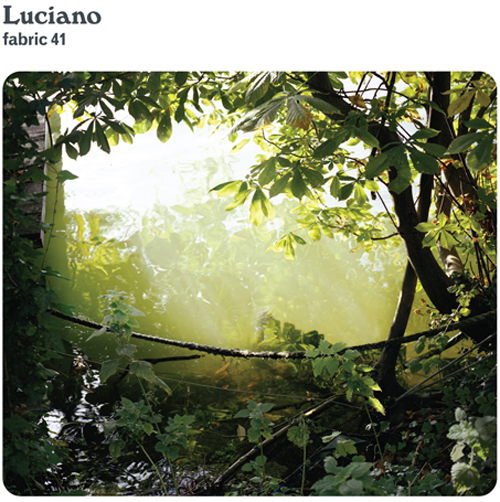
7. Luciano, "Fabric 41".

fabric41_Luciano_packshot2

This is a near-perfectly paced mix with not one but several great builds, anthemic tracks punctuating its flow, big house vocals, melodic Orbital-esque payoffs (e.g. "Arabesque"), and plenty else under the sun. One of the only mix albums I can think of with absolutely no dead spots.

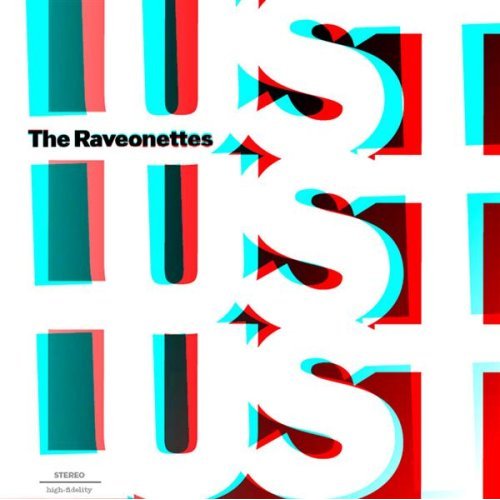
6. The Raveonettes, "Lust Lust Lust".

Raveonettes

It's been a treat to hear this band improve with every album, morphing from a girl group rip-off (albeit a really good one) into a band making transcendent pop in their own right. They're reaching a level that's close to that of Stereolab in the mid 90's (also Blondie in late 70's), where they've taken a bunch of easily recognizable influences and cultivated them into something that now feels effortless. No longer defined by their many ultracool influences, their ability to process those influences and churn out something bold and refreshing is pretty much unimpeachable these days. And also like Stereolab at their best (although sonically they sound nothing alike), their sighing harmonies and singsong melodies are a recipe for instantly falling in love with a band, and many times when listening to both I found myself asking "why can't/doesn't all music sound just like this?"

5. Petar Dundov, "Escapements".

petar_dundov_artwork.thumbnail

Although it would be accurate to describe this as a throwback to bleepy, melodic 90's techno, that's not the first thing that came to mind when I heard it. My first thought was how similar it was to Death In Vegas' "Satan's Circus" -- I figured I was in for a techno homage to classic krautrock. Others might adore or dismiss its debt to trance, in the way that tracks like "Oasis" gracefully build up to huge climaxes and then rapidly come down from that high. Naturally, all these viewpoints are correct, and shouldn't the best albums always contain a healthy variety of different somethings for different everybodys? It's just rare to be able to say that about a techno album ...

4. Portishead, "Third".

pe-portishead-third

Certain great albums contain a key moment where the whole album seems to kick it into another gear. Perhaps my favourite example of this is Arab Strap's "The Red Thread", or rather the precise moment when Aidan Moffat mumbles "23 years of foreplay lead up to this" about halfway through track five, "The Long Sea". The magic moment on "Third" happens around the middle of the first verse of "We Carry On", my realization of which helped to downgrade my opinion of the entire album in some twisted way because it dawned on me that I longed less to hear the entire album back to front than to hear "We Carry On" on a 50-minute continuous loop.

3. Scarlett Johansson, "Anywhere I Lay My Head".

anywhere-i-lay-my-head

I'm not going to claim that this album was "misunderstood" because even the dimmest of bulbs can grasp the simple concept of a movie star hooking up with a hot producer to forge wall of sound interpretations of a legendary recording artist. But it was the year's most easily dismissed album, and possibly the one most underappreciated as well. I'll hedge my bets because it's also the one that feels most likely to make me reneg on a lot of the nice things I said about it in five years time. This music might wear out its welcome once the giddyness of it dies away, leaving only empty gimmickry with some overpowering production and somewhat dull vocals. Sure, it sounds right and all the right names worked on it, and you can say the same about the Paris Hilton album. I'm not reneging on my earlier praise of this album, I'm just saying that we have no idea if the future holds "haha remember when ..." memories, or if Scarlett Johansson will wind up with a Grace Jones-like cult following on the basis of her slick reworkings of some classic songs. But I'll stick my neck out on this point: this is the best thing that anyone in TVOTR will ever be involved with unless the band splits up and its members become full-time producers.

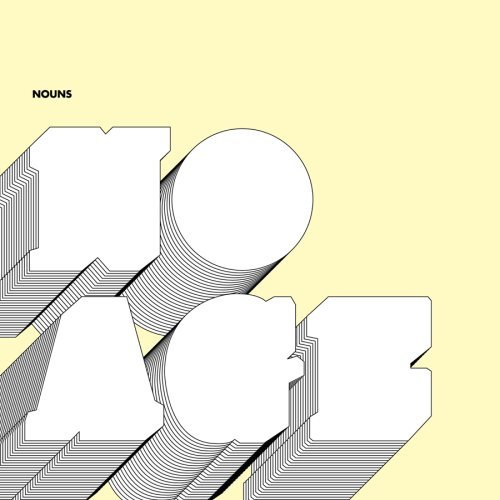
2. No Age, "Nouns".

No_Age_Nouns_Sub_Pop

I never aim to self-consciously "include" certain genres on year-end lists (at least, I hope not). Nevertheless, my favourite music over the past (insert any number your like) years contains virtually nothing that is the least bit punk-ish (or LA-ish). But I only just realized this, almost literally just when writing this comment, because at no time during the past several months did it occur to me that it was a personal oddity to be rocking out to this stuff. And no, at no point did I aim to convince myself that No Age were really shoegazers in a punk-y disguise.

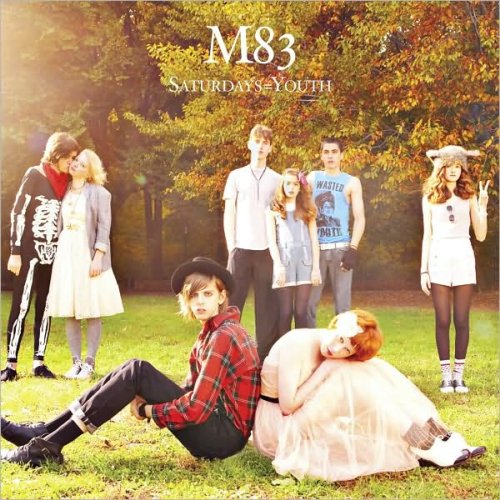
1. M83, "Saturdays = Youth".

m83_saturdays_youth

It's like listening to the greatest hits of the O'Jays, in that I don't just become nostalgic for the 70's. That might suggest that I miss the 70's and would like to relive them.. Rather, hearing the O'Jays vision of the 70's is infinitely more pleasant that actually living through the 70's. It presents a rosier picture than the reality ever could have been. It's like browsing though the brightest and most beautiful travel brochure, that shows nothing but sculptures lawns while avoiding glimpses at the cracked pavement and the garbage in the streets. And of course they didn't always sing about happy topics, but even their takes on heavier issues felt inspirational -- they made you want to be part of their world, not part of the world they were singing about. M83 have done the same for the 80s. You can relive the gated drums, poofy hair, and flashy synths without having to deal with, say, the Cold War and the threat of nuclear annihilation.

Notes to get off my chest

Well, cancel the stuff I wrote in my last post -- there's nothing like end-of-year list shenanigans to get one's energies flowing into his writing. I started writing these two notes as a prelude to the top ten, partly to get a few things off my chest, partly to give some honourable mentions to some music that didn't make it.

Sigur Ros became a much more interesting band over the past couple of years, thanks to career twists such as the Heima DVD/postcard and their newest album "Með suð í eyrum við spilum endalaust", of which the latter put them within spitting distance of being an actual pop band. Although their music was better overall when they were, uh, "less interesting", for the first time in their career, Sigur Ros seem completely unpredictable. Say what you want about their previous albums, but each one always had a clear singularity of purpose, most obviously on "{}", where they bludgeoned you with more or less the same ten minute mood piece / super climax until you either bought into what they were doing or turned off the stereo in disgust. But their latest album really had no idea what type of record it was trying to be, and this schizophrenia hurt the overall message this time even if many of the individual tracks are excellent. Mark P really nailed it with his PFM review (just be sure to ignore the last two sentences), where he argued that the album's biggest weakness is the band's inability or reluctance to completely break with past habits of knocking out epic string-drenched weepies almost by default. After the opening section of cheering pop singalongs, the pace comes screeching to a halt with the "Festival"/"Ara Batur" section (particularly the latter, whose overreaching sense of drama is actually kind of ludicrous and provides easy fodder for the people who think that they'll never be anything more than that type of band). At this point, logic and experience would suggest that the album's pace and volume would pick up again, but a funny thing happens on the way to the big finish, namely the exact opposite effect, with a series of closing tracks that are so sparsely constructed and molasses-like in their tempos that the album seems to completely vanish into thin air. Moving past the fairly superfluous "Illgresi" (a completely forgettable acoustic ballad that works if you consider it as a bridge between the album's chest-beating epics and its eventual slide into the vapours), the closing trio is arguably the best section of the album. Here, Sigur Ros try their hand at genuinely affecting, gentle piano ballads with virtually none of the OTT frills and schmaltzy gaga as per what used to be business as usual. "Fljotavik" is a ballad that would make Joni Mitchell proud, just verse, chorus, some simple strings, over and out in less than four minutes. It's ambient epilogue "Straumnes" fills a gorgeous gap of pure serenity, and I regret that they didn't go all Stars of the Lid with this one and stretch it out for ten minutes instead of simply using it as an interlude before "All Alright", which is so sparse that I can practically here Low's Alan Sparhawk whispering "whoa, this is sparse" as I listen to it. Its drawn out melody lines and vocals are like an alternate universe Low, with completely different instrumentation and singers that are too depressed and zoned out to even bother harmonizing. Although the music isn't as consistent as on their earlier albums, "Með suð í eyrum við spilum endalaust" sees Sigur Ros finding ways to set moods you never thought they could set, and on that basis alone it is still a minor triumph for them.

The Bug, "London Zoo". It's been given high praise from mags like the Wire (their #1 album of 2008) and as of this writing, it's the #2 most positively reviewed album of 2008 according to Metacritic. Even so, this album still slipped under most people's radar this year. I don't hear the greatness in it, but it's certainly a strong effort in a career-long series of them for Kevin Martin. Maybe that's his biggest problem, because the always reliable but never mercurial artists like Martin seem to become underrated on account of that consistency (consistency is always underrated, a band's first good album is usually newsworthy, but after their 10th good album its a bunch of hohum oh look they've done it again). He's also had the blueprint for the post-apocalyptic sound of crumbling industrial wastelands down pat for well over a decade. It just so happens that this sound has become more contemporary than ever thanks to the large crop of dubstep producers who have started to sound like him. Thus, somewhat paradoxically, listeners who are new to Martin's style will likely get more mileage out of "London Zoo" than his own longtime fans.

"London Zoo" actually isn't too dissimilar from MIA's albums -- they're both uniquely British multicultural stews filled with urban paranoia, political agitation, and chunky electronic hip hop beats. Except with "London Zoo", the production is fuller, nastier and more cavernous (and therefore more convincing at conveying the moods that it's aiming for), and the rapping doesn't suck. So whose albums and singles are topping critics lists and earning Grammy nominations, and whose aren't? Life isn't fair.

Monday, December 15, 2008

Trust Me, This is not a Year In Review

This is the first year, ever since I started faithfully following music when I was a little kid, that I didn't buy anything new.

A predictable trend developed over the last few years, as my rate of spending sharply decreased (initially due to a fairly precipitous slide in disposable income) and the availability of free music (via filesharing) sharply increased. But still, there's a world of difference between a trend and hitting the absolute bottom.

Maybe I didn't make myself perfectly clear -- this year, I bought LITERALLY ZERO music released in 2008.

This is nothing to be proud of -- I'm not bragging, just simply stating a fact. But how could this happen? It was a confluence of factors, to be sure: increased apathy for modern chart pop, no trips to a Toronto/Berlin/NYC -type music hub where I would be bound to stock up on music over the course of some inspired shopping sprees, quality mp3 blogs posting excellent music, slsk, and not having cable (and access to music video channels) for half of the year.

But my music spending habits couldn't be healthier. I buy plenty of CDs, just not the ones released in 2008. My bookshelves are stocked with incoming jewel cases and I'm running out of room for the books. This trend is in itself nothing new for me. The most recent year in which I bought mostly new or recent releases by contemporary artists or labels was probably 2002. By some point in 2004, I was not only buying mostly "older" CDs and records, but was putting a majority of my shopping energies toward browsing through older music, to the detriment of keeping up with the new releases hitting the shops. Splitting time between New and Old isn't a zero-sum process, but there definitely is an inverse relationship at play, particularly when it comes to purchases.

Now, flipping through the bargain bins is more or less all I do. This might be considered a more noble habit if I lived in San Francisco or Berlin, but rest assured that I do have a fair number of options -- more than I expected when I moved. Relocating to a real city does wonders for enabling these types of shopping habits. So it means that I'm well settled into my new role as a musical archeologist. I trawl around cities and dig up hidden gems at undervalued prices. It's more than just a labour of love, it's a honed skill that requires a combination of patience and being able to draw on years of experience to recognize and remember stuff that most people have long since forgotten or stopped caring about (perhaps with good reason). I've spent half a lifetime learning this trade, picking up the experience necessary for sifting through thousands of uninteresting rocks in order to find two or three that are of value. I have regular locations where I conduct my "digs". I display my wares in my home, my precious talismans brought back from the field, where I can excitedly tell people things like "here's that legendary Rockets Red Glare album, and it has to be at least ... 2500 years old!"

I have the impression that critical consensus is at an all-time low, and it's not something specific to this year's crop of new releases. Critics are more geographically separated and are exposed to a greater volume of music than ever before. Years of discourse is archived (blogs, old reviews, discussion boards) and easily accessible. There has been an explosion of such internet content over the past five or six years, and perhaps we've reached the tipping point where associations with archived criticism are retained more strongly than those that are forged with newer criticism. Maybe the signal to noise ratio for quality criticism has become too low, ergo less meaningful interaction, ergo less consensus, or maybe we're all just bored of each other for different reasons. Of course a reduction of consensus simply means there are fewer "must have" new albums to galvanize people, and while the overall demand for hearing music isn't reduced, that demand becomes spread into thinner and more distinct strands. Curiosities get stirred up, people are more inclined to revisit the seemingly infinite wealth of older music (and to reflect on it with the perspective of x # of years of easily accessible criticism) instead of the more limited supply of music that's been produced this year.

For writing, I have to admit that this year was a bit of a disaster. There have been some long stretches during which I can't seem to write anything I deem interesting or usable, punctuated by spurts where I actually managed to get something done. I am sitting on a disappointing amount of unfinished writing, stuff that was started and then left behind either because I lost the will to complete it, or, increasingly often, spent so much time tweaking it that was never satisfied with it and couldn't find it in me to converge toward a finished product. I hope that some of this unfinished writing can see the light of day in 2009. These frustrating bouts of over-editing and perfectionism have been plaguing all of my writing (also in my actual work) since 2005 or so, and I think I know the reason but am not sure how best to handle it. One solution might be to get back to writing shorter, spur-of-the-moment pieces, as opposed to longer pieces where one feels more of a need to make a "statement".

The holiday listmaking season is upon, and of course I'm all over that like a moth to a flame. The top tens are nearly ready. Please wait.

Wednesday, December 03, 2008

Today's random pairing of new albums: Fennesz, "Black Sea" and Kanye West, "808s and Heartbreak"

Fennesz's music is simply so much better when he unleashes a full-out drone attack, as opposed to being cute and poppy with wistful melodies and introspective acoustic guitar plucking. Tracks like "Glide" and "Black Sea" unfurl slowly over several minutes, piling up noise and always making sure to maintain texture's grip on melody. Perhaps all the collaborations he's been involved with since the release of "Venice" have revived Fennesz's yen for drone and abstraction because there's a real "returning to his roots" feel to this album, almost back to the rougher edges of the "Field Recordings 1995-2002" material.

Kanye West, as everybody surely knows, has not only completely departed from his sonic norm but is challenging charts worldwide with some of the most personal and introspective hit songs in pop music history. I love the fact that this is not a hip hop album -- rather, it is a Kanye West album and nobody is trying to pretend differently. Rhythms (4/4 beats, electro-pop beats) and melodic leads (rave-y synths, Autotune-a-go-go) that were completely foreign to R&B music just a few years ago are now used with such regularity that it truly feels like the genre(s) can credibly incorporate nearly any sound or style and mold it into a hit song. The boundaries are disappearing, and "808s and Heartbreak" is a big nail in the coffin of R&B uniformity. We've come a long way since the days of dueling divas trying to out-scream each other over Boyz II Men's simplistic, cookie cutter, and endlessly recycled beats.

"808s and Heartbreak" is Kanye's "This is Hardcore", his post-everything "life is bullshit" record. I thought that the second single, "Heartless", was caustic enough, but then I heard "Robocop", which ends with his mind evaporating into the world of painful flashbacks, coolly spewing random insults and snippets of dialogue ("haha that was your first good one in a while") over the cheery tones of a string quartet playing a near-variation of "Eleanor Rigby". It's unsettling stuff, but makes for utterly fascinating listening. With lead (anti)-single "Love Lockdown", West has made his very own "Tusk", by following up a string of huge hits with a song that's difficult to love thanks to a sparse vocal melody and nary a backbeat with the exception of occasional stretches of frantic, thumping percussion.

It's a Kanye West production, so of course, all this sounds fantastic even if its unfamiliar territory for him. I wouldn't wish his personal troubles on anybody, but his reactions to it all -- caustic robotic ranting over chunky electo-pop -- along with the musical quality of the results, makes for one of the most compelling narratives in pop this decade.

Wednesday, November 26, 2008

"Urban Renewal" Featuring the Songs of Phil Collins

Now here is an album that I completely missed out on at the time it was released, so stumbling across it in the bargain bin was quite the surprise (although some time later I did recall that I had heard, at some point in the last couple of years, the semi-legendary* ODB version of "Sussudio", and yet somehow I failed to ask myself the obvious follow-up questions such as "why the shit is ODB covering 'Sussudio??', etc.) So there you have it: years before notable rap and R&B artists couldn't help but get choked up at the mention of Coldplay, some of the biggest stars of the day took a crack at modernizing the music of one of the whitest solo artists in recent chart history.

Seven years on, it's little more than a curio, and undoubtedly a missed opportunity to make true to the album's title and transform these songs into something refreshingly different. Only ODB, by virtue of being himself, and Kelis' warped take on "I Don't Care Anymore" stand out, but most of the album consists of slightly more soulful rehashes of the same shmaltz that Phil Collins already mastered with the originals. "Against All Odds" is just begging for the R. Kelly "I Believe I Can Fly" treatment", but rather than grant the song the histrionics that are more than warranted in this specific case, Montell Jordan tries to play it smooth and robs the song of its all-important climax.

* Why is it semi-legendary? Because it's ODB. Performing "Sussudio". The Phil Collins song. Any more questions?

Sunday, November 23, 2008

The Piano Has Been Drinking (Not Me)

One day last week, my clock radio went off at 8:30 AM, just as it does everyday, and I stayed in bed trying to catch more rest while letting the music slowly stir me into the land of the semi-conscious (just as I do everyday). Except on this day, when I was instantly shocked back to life by a song I hadn't heard in eleven years.

Even though I only heard it once, all those years ago, the song stuck in my head because it was probably the first time that I really got Tom Waits, got past the gravelly voice and "weird" melodies and instrumentations, and appreciated him at his surly, beer-soaked best. Waits took an unforgettable refrain and his familiar warped lyrical wit, and made crying into your beer actually seem like a attractively bittersweet thing to do. I'm always amazed at how powerfully music can be intertwined with memories, which is but one reason why you can remain a fan of a song (or artist) even though you might not hear it for months or years. And then, upon finally hearing the song again, you can find yourself singing along effortlessly, with the memories flooding back as if the music itself had been forever preserved in a photo album.

Then I found this TV performance that made me view the song in a very different way -- more goofy and farcical, with Waits as the smiling court jester. Watching him smoke, drink, and spin witticisms in the post-performance interview is also a must-see treat.

Wednesday, November 19, 2008

November random notes on TRL, Wolfgang Voigt, and Animal Collective

1. Mike Barthel sums up the "TRL era" over on Idolator, and he gets it dead on the money. It's certainly true that "we" (music fans and most certainly music critics born before, say, 1980) didn't recognize the importance or influence of the show during the peak of it's popularity and had little inkling that TRL would come to represent an entire era of music tastemaking. And then there's the rapidity of the critical rehabilitation of this music in "serious" rock and pop discourse. Hardened indie types wouldn't have minded if the Backstreet Boys had disappeared down a rabbit hole anytime in 1998, but those same jaded people likely swoon to "I Want It That Way" in 2008 (as for my thinking at the time, that was the song and video that was just too snuggly and lovable for me to seriously hate the Backstreet Boys any longer). The Velvet Underground weren't taken seriously for nearly twenty years, but Britney Spears' music arguably spawns more rockcrit than any pop or rock act in this decade. Maybe in ten years, TRL will be even more entrenched in the accepted rock orthodoxy, with it's power to make or break artists considered on par with that of the Ed Sullivan Show.

2. Here is an interview with Wolfgang Voigt from the same Red Bull Music Academy series that presented the Moritz von Oswald interview I discussed a few weeks ago. If von Oswald's session left you a bit cold, with the feeling that you didn't get an open and honest look at the man himself, you'll want to check out Voigt's far more revealing interview. At length, he discusses the inspirations for his music, complete with an eye-opening examination of the mythology of the German forest and how those rural atmospheres affected him not only in his youth, but up to the present day. He also explains the multiple meanings behind some of the titles he's used over the years (e.g. "Auftrieb") -- clever word play that is likely lost on anyone who is not a native German speaker. But my favourite part, in something of a car crash sense, happens in the last few minutes, when someone from the audience asks "is Kompakt a gay label" in probably five different roundabout ways without actually coming right out and asking the question, and Voigt responds "yes" in his own five roundabout ways without actually coming right out and answering him.

3. I dug out a Feb 2005 recording of an Animal Collective show and as "Banshee Beat" came on (and its twelve minutes of slowly unraveling, enveloping goodness), I realized what I'd been missing from this band for the past couple of years. Simply put, Animal Collective are no longer a mysterious band. It made perfect sense to perform these songs behind curtains, screens, and sinister masks, accompanied by pulsing, swirling lights. I think I let out a groan in the very first second of the recently leaked "Brother Sport", because the vocals ring out clear as day, upfront and happy, with perfectly clear production and easily separable melodic elements among the bumping bassline and the layered, ringing synth lines. That's not to say that the track isn't quality, because it is, and this kind of recording isn't a necessarily bad thing given the groovier style that they're currently pushing. But the guitar-heavy, foggy sound of "Feels" was most certainly their peak and they're not likely to touch those heights again.

Wednesday, November 12, 2008

Don't Call it a Comeback

It's been an interesting year for techno producers who have seemed to reappear out of nowhere (or after a few quiet/dormant years). Moritz von Oswald released an album with Carl Craig and started showing up for interviews. Another German legend, Wolfgang Voigt, re-released the his four albums as Gas and played his first live gigs under that moniker. A couple of weekends ago, I caught a couple of semi-comebacks at close range, at a party featuring Move D and Fairmont. It's a big stretch to say that Jake Fairley ever took a leave of absence from music, but he's a slow worker by many producers' standards, and his chameleon-like excursions between dance genres (plus his foray into rock as part of The Uncut) gives the impression that his career is nothing but a well-spaced series of vanishing and reappearing acts. Working as Fairmont, he is able to tap into the wave of more organic, soulful, minimal techno of the moment while taking advantage of his live rig to tease the crowd with the types of huge, extended breakdowns that you'd expect from a trance set. This pattern gets awfully repetitive once his set approaches the hour mark, and while I personally would have preferred if he'd balanced those tricks with more fluid, breakdown-free stretches, I was clearly in the minority among the crowd that night. [cute piece of personal trivia: Jake Fairley is now the first artist that I've seen live in three different cities]

Move D's period of dormancy lasted so long that I'd completely forgotten about his work with longtime collaborator Jonah Sharp aka Spacetime Continuum -- such as his remix on the latter's "rEMIT rECAPS" album. There's something dispassionate about the way Move D strips techno of its robotic, futuristic elements and makes it safe for cafes as well as dancefloors, and his recent podcast for Resident Advisor, which was filled with his new and unreleased recordings, left me a bit cold. But his DJ set efforlessly combined the smooth and the rough, bridging from his mellowed-out bread-and-butter techno to harder, more teeth-rattling tracks over the course of a stellar 2+ hour set.

It had been years since I'd heard the name Petar Dundov, who, under the name of Brothers Yard, used to create some of the harshest, most punishing pure techno around. After stuffing his brain with the music of the 70's, specifically prog, motorik and Sheffield-oriented synth pop, he's produced what might be the year's best techno album, "Escapements". The tracks are long -- virtually all of them run between eight and ten minutes -- but their looping, skittering melodies are addictive and manage to be both sing-song playful and suitable for the strictest of dancefloors. It all reminds me of how and why Orbital were nearly unassailable in the mid-90's. With the exception of an introspective track like "Anya", Dundov doesn't engage in cinematic storytelling in the style of "In Sides" or "The Box" EP, but you took "Mddle of Nowhere"-era Orbital, subtracted some Detroit and replaced it with Cluster, you'd more or less end up with "Escapements". The Cluster comparisons feel particularly fitting, in the way that synth melodies act as both the hooks and the rhythmic propeller of the tracks.

Thursday, October 30, 2008

Phil Spector in the 1970's

Box sets are a blessing and a curse -- they gather a large and hopefully definitive amount of material associated with a well-known artist, but it is easy to assume that they represent the whole, complete picture. One might think "if I buy the box set then I'll have all the important stuff and won't have to ever buy anything else by this artist", although for a truly great artist it is virtually impossible that all the essentials can be collected in a reasonably sized package.

Phil Spector's "Back to Mono" collected his career highlights from 1958-1969, a period that can roughly be defined as one in which he created monophonic productions intended for AM radio, and worked with a constantly shifting stable of artists who were less famous than he was. The implication is that Spector ceased to be interesting or relevant after 1969, or even after 1965, considering the small amount of material that appears on the box set from that year onward. Beyond his work with the Beatles ("Let It Be") and solo albums by George Harrison and John Lennon, even many Spector fans haven't bothered to devote much effort into unearthing his 1970's works, and when they are spoken about, it is usually to repeat stories about how so-and-so hated working with Spector and ended up practically disowning the work they did together. I still haven't heard The Ramones' "End of the Century", but I can repeat the story about how Spector reportedly pulled a gun on the band in the studio in order to force them to listen to and record the Ronettes' "Baby I Love You".

But 1965 is still a significant date -- after that time, singer-songwriters were the unquestioned stars of music and a producer could not, and would not be a top star in his own right on the worldwide music scene again until the rise of the Neptunes and Timbaland (although one could certainly argue for Quincy Jones, particularly in the case of his Grammy winning solo album in 1990). Spector never seemed to accept that. No matter who he worked with, whether it was in the 60's, 70's, or beyond, he insisted on playing G-d in the studio, pushed to get his way far beyond any reasonable bounds of etiquette or acceptable behaviour, and drove artists into fits of near insanity with his relentless perfectionism. In some sense, these stories are all that has survived from Spector's 1970's work, while the music he was working on at the time simply provides the background and context for the story.

But what about the music itself? Thanks to a recent thread revival on ILM, a bunch of people, including me, finally exhumed some of Spector's long-neglected 1970's work. Both Dion's "Born To Be With You" and Leonard Cohen's "Death of a Ladies' Man" (neither of which I had heard previously) have the unmistakable Spector touch -- lush arrangements, string sections, booming drums that sound like they were recorded in a cavern, ghostly ambiance filling the cracks between all the other instruments, etc. But neither album would be mistaken for his 1960's productions. Paranoia and sadness lurks through most corners of these records, which were clearly (hopefully?) not meant for AM radio.

"Born To Be With You", released in 1975, has long been one of Jason Pierce's favourite albums. That was news to me, but after hearing the album it made perfect sense, since based on his recent career path, Spiritualized albums have been converging to this sound fairly rapidly (i.e. confessional singer-songwriter folk-blues with a hint of maximalism in the production). "Make the Woman Love Me" tackles good ol' love and longing with the dewy-eyed wonder that Daniel Johnston would later perfect on his albums, and the title track is a glorious blue-eyed soul epic, with a simple, gritty lyric delivered over Spector's scaled-back, darkened pizzazz.

After a number of listens, I'm sold on the notion that "Death of a Ladies Man", released in 1977, is a near-masterpiece. All of Spector's poor treatment of Cohen (including locking him out of the studio when the album wasn't finished) acquires a modicum of good sense if you look at it as just another one of Spector's little experiments in finding "the voice". Like with Ronnie Bennett a decade and a half earlier (a girl who sang like a little boy), he'd found a new prototype in Leonard Cohen (a poet who sang like a dirty old man) and once he had that voice in the studio, he plugged it into his (Spector's) usual formula and assigned it to the songs that he thought were worthwhile to record. Details such as Cohen's well-established reputation of his own artistic ambitions for the album were of little consequence to Spector. "Death of a Ladies Man" is not a Leonard Cohen album inasmuch as it is a Phil Spector album featuring Leonard Cohen on guest vocals, and Spector went out of his way to ensure that.

Nevertheless, the results are impeccable. "Memories" is the clear highlight: a skyscraping Spector mini-opera with layer upon layer of 60's AM glitz, huge crescendos and false stops, choirs, a mid-song sax solo, and just about every other orchestrally dramatic bell and whistle in the producer's repertoire. Cohen transforms himself into nothing resembling the sensitive poet of his best known hits -- gone are preciously erotic lines like "they touched both my eyes and I touched the dew on their hem" or "you touched her perfect body with her mind", this is Leonard Cohen macking on chicks at the high school dance and resorting to a bit of proto-Dawson's Creek sappiness to accelerate down the path to a night of slapping stomachs. It's Cohen's very own teen fantasy precursor to "Paradise By the Dashboard Light", where the protagonist is proud of the fact that he'll say just about anything to get busy with the girl he wants. The last minute of the song sees Cohen completely hung up on the object of his affection, screaming "your naked body!" over and over in a self-induced fit of orgasmic desire, and I can only imagine how many hours Spector made him yell in the studio until he got the vocal down just right (who knows, maybe this one recording did more to reduce Cohen's voice to his current raspy baritone than age or anything else). By the time this six minute rollercoaster is over, I don't know whether to laugh, cry, shake the hands of everyone involved, or put up streamers and balloons in my apartment and find someone to slow dance with. Even Cohen had to admit that the whole thing was brilliant, for this is the only song on the album that he regularly performed live, albeit in a greatly stripped down form and only for a couple of years in the 70's before he effectively disowned it like everything else on "Death of a Ladies Man". And guess what, there's even a video!

On an album filled with arrogance and hyper-masculinity, "Paper Thin Hotel" stands out as the one song where the macho protagonist gets his commuppance by having his heart broken when he spies on an unsuspecting lover and hears things that he was never meant to hear. Pulp's "Live Bed Show" asked the tantalizing question "what if beds could talk?" but for Jarvis Cocker it was a gossip-chasing dream scenario, where the talking beds would spill the dirt that he and the characters in his songs were always chasing after. Leonard Cohen puts his ear to the talking wall and hears terrible things that he wishes he'd never heard, and despite claiming that there was "a heavy burden lifted from my soul" thanks to finally knowing the truth, it's the next line that kills me -- "I learned that love was out of my control". Sure, you might be better off knowing the whole truth, but the fact remains that the whole truth ... well, sucks. The reminder that love is a roll of the dice that can disintegrate or be irreparably harmed without the slightest notice is a brutal and sobering lesson, one that any sanity-preserving person would prefer that they never have to learn or accept. Adding to the heartbreak, the entire drama is adorned by Spector's kitchen sink romanticism, not too dissimilar from an ever better Pulp tune, the bittersweet "Happy Endings". There's an undercurrent of lounge exotica on the album, of which "Paper Thin Hotel" is the best example, that draws favourable comparisons between Cohen's lovable horny dude persona and Serge Gainsbourg's self-characterizations from his mid-70's work. That's a comparison for the modern listener to make, since it's a near-certainty that neither Spector or Cohen had heard of Gainsbourg when they made their album.

Parts of Side 2 ensure that "Death of a Ladies Man" is far from a perfect album. "Don't Go Home with Your Hard On" is a dumb but fun rave-up with Bob Dylan cranking away on background vocals. And it's a disco song. No, I'm serious, it is. It won't be making your personal list of all-time disco classics any time soon, but you owe it to yourself to hear Dylan, Cohen and Spector trying their hands at disco at least once in your life. However, "Fingerprints" is a pitiful disaster, and lord only knows why they (i.e. Spector) thought that a country and western yee-hah shoutalong would be a good addition here.

Thankfully, all is redeemed with the title track. Its surrealist lyrics and vocal cadences recall Dylan's "Desolation Row", and the simple, almost amateurish harmonies mimic the Grateful Dead's best 70's recordings. The Ladies Man's demise can be chalked up to, naturally, too much fucking. Cohen can be really funny when he wants to be, and the OTTness of the lyrics surely indicates he was at least somewhat in on Spector's plan to make an album saturated with overdramatized characters with the production values to match. Suddenly, the song downshifts in tempo, adorns itself with shimmering synths, and then it's all starlight and daydreaming as I get "Le Petit Prince" flashbacks and start hoping that the final refrain of "It's like our visit to the moon or to that other star / I guess you go for nothing if you really want to go that far" will continue forever, "Hey Jude" style. It's a stunning line with a conflicting double meaning, where reaching for the stars turns into a metaphor for mindless, baseless, soulless sex and everything hinges on the word "nothing". That is, if you've taken the trouble to travel all the way to the moon, then you should know that you've done it all for "nothing" = "for no good reason whatsoever". Or, if you're going that route, then you're doing it for "nothing" = "for free", so go right ahead as long as you never forget that it's all in good fun and will never lead to anything satisfying. And with that, the song fades away into a twinkling dreamland ...