It's been a rough couple of days for celebrity deaths (Tony Gwynn?? No...) and it's good to see that Kasem is getting the respect he deserved in death, seeing as the end of his life appears to have been anything but pleasant. His family feuding over his estate and his wife allegedly holding a senile Kasem prisoner in their home will hopefully be forgotten -- a sad end to one of the great lives in pop music history.
Chris Molanphy captures the essence of Kasem perfectly in his piece for Slate. It's true, he unashamedly loved pop, even when it wasn't exactly popular to do so. Chart nerds could salivate over how he'd phrase a dramatic jump from #5 to #3, making it sound like a titanic newsworthy event without hardly ever raising his tone of voice. I grew up watching "America'sTop 40" on TV every Saturday and rediscovered Kasem (in a way) on radio in the late 80's when I would listen to the countdown in full nearly every week. I listened to and recorded his broadcast of the top chart songs of the 1980's and relistened to it incessantly in the 90's, it was one of my personal all time favourite radio moments.
As Molanphy explains, Kasem's true talent was that he was a storyteller who rarely came across as a hype-fueled DJ paid by record companies to plug the week's most popular music. He humanized the artists in a way that DJ's and even many journalists rarely do, and his stories were so vivid I could often picture myself in the room while the music was being created.
Monday, June 16, 2014

Saturday, May 24, 2014
"20 Feet From Stardom", dir. Morgan Neville
There are plenty of impressive things about this documentary. The celebrity roll call, which includes Sting, Stevie Wonder, Mick Jagger, and Bruce Springsteen, is eye opening to say the least. The big celebs speak better to the importance and admiration for the background singers than the background singers themselves do, which in a roundabout way, turns out to be the single biggest weakness of the film.
This film came off like a series of disjointed interviews that relies on name dropping and the aforementioned star power to make its case. The irony of the background singers (who in large part, for various reasons, couldn't make it as solo artists) needing their superstar friends to tell their story for them seems to be completely lost on the director.
The film floats several reasons why they never became stars in their own right. Many simply loved their roles as background singers and had little desire to do anything else. Others were afraid, or lacked the confidence to stand centre stage, and learned to accept their background role. Yet we also see them getting singing duets or even getting featured solos as part of stadium tours, and writing songs for the breakthrough solo album that may never get recorded. So which is it? Are they missing the "charisma gene" (as implied by Springsteen) or is a matter of never being afforded the opportunity to shine by a myopic music industry? The movie never takes sides, but it really should have. Documentaries should have a point of view. Beyond the obvious degree of admiration for what they do, I left the theatre not having a clue how the director really felt about most of these people.
The highlights include Merry Clayton's story about getting woken up in middle of the night and called in to record "Gimme Shelter" with the Rolling Stones, and every scene featuring Darlene Love.
Short aside: in the pre-film lecture by Yashiv Cohen, which focused on the gospel roots of soul and R&B, I realized that there's not much of a leap between The Soul Stirrers' "I'm a Soldier" and The Velvet Underground's "Heroin". At the risk of sounding silly and ignorant, has this drone rock gospel been hiding in plain sight all this time and I didn't realize it?
This film came off like a series of disjointed interviews that relies on name dropping and the aforementioned star power to make its case. The irony of the background singers (who in large part, for various reasons, couldn't make it as solo artists) needing their superstar friends to tell their story for them seems to be completely lost on the director.
The film floats several reasons why they never became stars in their own right. Many simply loved their roles as background singers and had little desire to do anything else. Others were afraid, or lacked the confidence to stand centre stage, and learned to accept their background role. Yet we also see them getting singing duets or even getting featured solos as part of stadium tours, and writing songs for the breakthrough solo album that may never get recorded. So which is it? Are they missing the "charisma gene" (as implied by Springsteen) or is a matter of never being afforded the opportunity to shine by a myopic music industry? The movie never takes sides, but it really should have. Documentaries should have a point of view. Beyond the obvious degree of admiration for what they do, I left the theatre not having a clue how the director really felt about most of these people.
The highlights include Merry Clayton's story about getting woken up in middle of the night and called in to record "Gimme Shelter" with the Rolling Stones, and every scene featuring Darlene Love.
Short aside: in the pre-film lecture by Yashiv Cohen, which focused on the gospel roots of soul and R&B, I realized that there's not much of a leap between The Soul Stirrers' "I'm a Soldier" and The Velvet Underground's "Heroin". At the risk of sounding silly and ignorant, has this drone rock gospel been hiding in plain sight all this time and I didn't realize it?
Thursday, May 22, 2014
Music in Vienna (May 2014 edition)
No radio alarms and Irish pubs this time, just great shopping and two incredible concerts.
At a time when music shops are an endangered species just about everywhere, I was happy to see that all the shops I visited six years ago are still in business. I even stumbled across a couple of new ones (new to me at least).
The results were a bit different however. Rave Up Records carried more punk and indie rock than I remember, and the new stores (including Record Bag) were also heavy on punk and metal. Scout Records is packed with records and discs from floor to ceiling, with boxes piled upon boxes upon racks of CD's, crates underneath tables and discs hanging on the wall. It's the kind of place that will cease to exist when the 70's and 80's punks and jazz aficianados leave the music business, so enjoy it while you can. Musik und So's stock seems to have shrunk considerably (IIRC), but you can still buy plenty of great CD's for one Euro or not much more. I bought the 2CD reissue of The Cure's "The Head on the Door" (an album I never owned in any format) for just nine Euros.
The most worthwhile stop was at Substance. Not only have the prices in Vienna leveled off and even fallen below those of other major European cities (e.g. Milano), but Substance is now undercutting their competitors in the Viennese electronic music market, which I definitely don't remember to be the case last time. I had to put back several amazing CD's to justify the total expenditure to myself and keep the total cost under 100 Euros. I grabbed a ton of great stuff, including last year's Haxan Cloak album that I'd been meaning to check out for ages, the new Voigt and Voigt, a not so new Emeralds disc for a great price, and a few more.
The concerts were great but the venues were even better. The Musikverein is the home of the Vienna Philharmonic and it's not clear to me how a box shaped venue could have such exceptional acoustics. The abundance of wood as opposed to steel is a big part of it, but beyond that I'm stumped. Its main chamber is called the "Golden Hall" for obvious reasons -- it's a sensory overload of shimmering gold, glistening wooden beams, and regal paintings. Beethoven's "Egmont" Overture has long been a favourite of mine despite a lifetime of not liking opera, but his Piano Concerto No. 3 is not (too many frilly runs) although soloist Rafal Blechacz's playing could not be faulted. The highlight, by far, was Stravinsky's "The Rite of Spring" -- a piece I'd always appreciated for its historical importance but couldn't bring myself to like. Hearing it played by a full symphony orchestra changed that. All its unusual rhythmic shifts felt natural when you can react along with the notes while watching the orchestra attack the piece, and the pounding of the drums ring in the ears and enhance the experience far beyond what you would normally experience on disc.
The Burgtheater (National Theatre) is another stunning building that I felt privileged to visit. The organizers of the Wiener Festwochen (Vienna Festival) deserve a round of boos for their arcane rules for ticket collection and distribution, and for selling tickets with partially obscured views of the screen without any regard for fair pricing. I sat in the centre section on the first mezzanine level and every seat in that section, save for the pairs of seats in the corners of the last row, were sold at the same price. However, at least one third of them (including mine) had partially obscured views due to the low hanging ceiling or sharply angled side walls. It's fine for a play, when you don't need to see much more than the performers on stage, but for a 3D Kraftwerk concert, it's an inexcusable promotional mistake. I think many people in the side balconies and the upper mezzanine would have had similar problems. In my section, there was a fair bit of seat reshuffling, as people preferred to sit in the aisles while the people in the back rows moved down to take their seats or used the extra space to recline and find better views.
Once I found a way to deal with these issues, I could start to properly enjoy an otherwise excellent concert.
My decision to choose the "Trans Europe Express" concert deserves a bit of explanation. There wasn't much question about it really. TEE has always been my default choice for my favourite Kraftwerk album. Of equal importance, songs from "The Man Machine" and "Computer World" have been the basis of their live sets for years, whereas most songs from "Autobahn", "Radio-Activity", and TEE have been rarely played over the past two decades, if ever. If you're going to a special event that only takes place in a select few cities, why choose to hear the same songs you can hear in nearly all their regular concerts?
After buying the tickets to the show, I listened to TEE (of course) and heard things I'd never heard before. Over the past several years, I found myself listening to the modern, reconstituted touring band version of Kraftwerk (e.g. the "Minimum Maximum" DVD or other recent live shows) far more than the original albums. During a rare airing of Kraftwerk as they were thirty seven years ago, for the first time, TEE sounded weak, tinny, and lacking in punch. In contrast, "The Man Machine" has a lot more in common with contemporary electronic music -- funkier, more precise, more metronomic. This is where they first because The Robots and adopted a style and image that they'd carry with them more or less for the rest of their career. However, "The Man Machine"'s streamlined efficiency is also its biggest fault. Everything is too ordered, not a note is out of place, and there's not the slightest air of whimsy or improvisation. TEE is more varied, more cerebral, and its highs are a lot higher.
TEE is the last album where Kraftwerk's roots as a jazzy improv outfit are central to the music. It's their final attempt at preserving and advancing the style of music they broke through with. After that, the pressure to evolve was too strong and there was no way to push the old style any further. It was time to transform into something else.
For some reason, this kind of album turns out to be my favourite for a lot of notable artists. Other albums fitting into this category include Depeche Mode's "Violator", Stereolab's "Mars Audiac Quintet", and PJ Harvey's "Rid of Me". They are the last albums of those bands' "original" style before they quickly morphed into something else entirely.
On that night at the Burgtheater, even their playing seemed like a throwback to the old days. In order to play these old songs they needed to go back to being what they once were. I could see Ralf Hutter playing the chords to "TEE" (the song) on his keyboard. Kraftwerk looked like performers again and less like office workers who would prefer to send their robots on stage to do the work for them.
In fact, a quick check of the "Minimum Maximum" DVD shows that their live setup hasn't changed much. Although their work stations once had monitors that blocked the audience's view of what they were doing, in some shots you can see that they still had the same keyboards and effects modules, and you can see them physically playing the notes if you look carefully enough. But in Vienna in 2014 -- perhaps due to the venue or the set list -- Kraftwerk's world looked and sounded different for the first time in a long time.
At a time when music shops are an endangered species just about everywhere, I was happy to see that all the shops I visited six years ago are still in business. I even stumbled across a couple of new ones (new to me at least).
The results were a bit different however. Rave Up Records carried more punk and indie rock than I remember, and the new stores (including Record Bag) were also heavy on punk and metal. Scout Records is packed with records and discs from floor to ceiling, with boxes piled upon boxes upon racks of CD's, crates underneath tables and discs hanging on the wall. It's the kind of place that will cease to exist when the 70's and 80's punks and jazz aficianados leave the music business, so enjoy it while you can. Musik und So's stock seems to have shrunk considerably (IIRC), but you can still buy plenty of great CD's for one Euro or not much more. I bought the 2CD reissue of The Cure's "The Head on the Door" (an album I never owned in any format) for just nine Euros.
The most worthwhile stop was at Substance. Not only have the prices in Vienna leveled off and even fallen below those of other major European cities (e.g. Milano), but Substance is now undercutting their competitors in the Viennese electronic music market, which I definitely don't remember to be the case last time. I had to put back several amazing CD's to justify the total expenditure to myself and keep the total cost under 100 Euros. I grabbed a ton of great stuff, including last year's Haxan Cloak album that I'd been meaning to check out for ages, the new Voigt and Voigt, a not so new Emeralds disc for a great price, and a few more.
The concerts were great but the venues were even better. The Musikverein is the home of the Vienna Philharmonic and it's not clear to me how a box shaped venue could have such exceptional acoustics. The abundance of wood as opposed to steel is a big part of it, but beyond that I'm stumped. Its main chamber is called the "Golden Hall" for obvious reasons -- it's a sensory overload of shimmering gold, glistening wooden beams, and regal paintings. Beethoven's "Egmont" Overture has long been a favourite of mine despite a lifetime of not liking opera, but his Piano Concerto No. 3 is not (too many frilly runs) although soloist Rafal Blechacz's playing could not be faulted. The highlight, by far, was Stravinsky's "The Rite of Spring" -- a piece I'd always appreciated for its historical importance but couldn't bring myself to like. Hearing it played by a full symphony orchestra changed that. All its unusual rhythmic shifts felt natural when you can react along with the notes while watching the orchestra attack the piece, and the pounding of the drums ring in the ears and enhance the experience far beyond what you would normally experience on disc.

The Burgtheater (National Theatre) is another stunning building that I felt privileged to visit. The organizers of the Wiener Festwochen (Vienna Festival) deserve a round of boos for their arcane rules for ticket collection and distribution, and for selling tickets with partially obscured views of the screen without any regard for fair pricing. I sat in the centre section on the first mezzanine level and every seat in that section, save for the pairs of seats in the corners of the last row, were sold at the same price. However, at least one third of them (including mine) had partially obscured views due to the low hanging ceiling or sharply angled side walls. It's fine for a play, when you don't need to see much more than the performers on stage, but for a 3D Kraftwerk concert, it's an inexcusable promotional mistake. I think many people in the side balconies and the upper mezzanine would have had similar problems. In my section, there was a fair bit of seat reshuffling, as people preferred to sit in the aisles while the people in the back rows moved down to take their seats or used the extra space to recline and find better views.

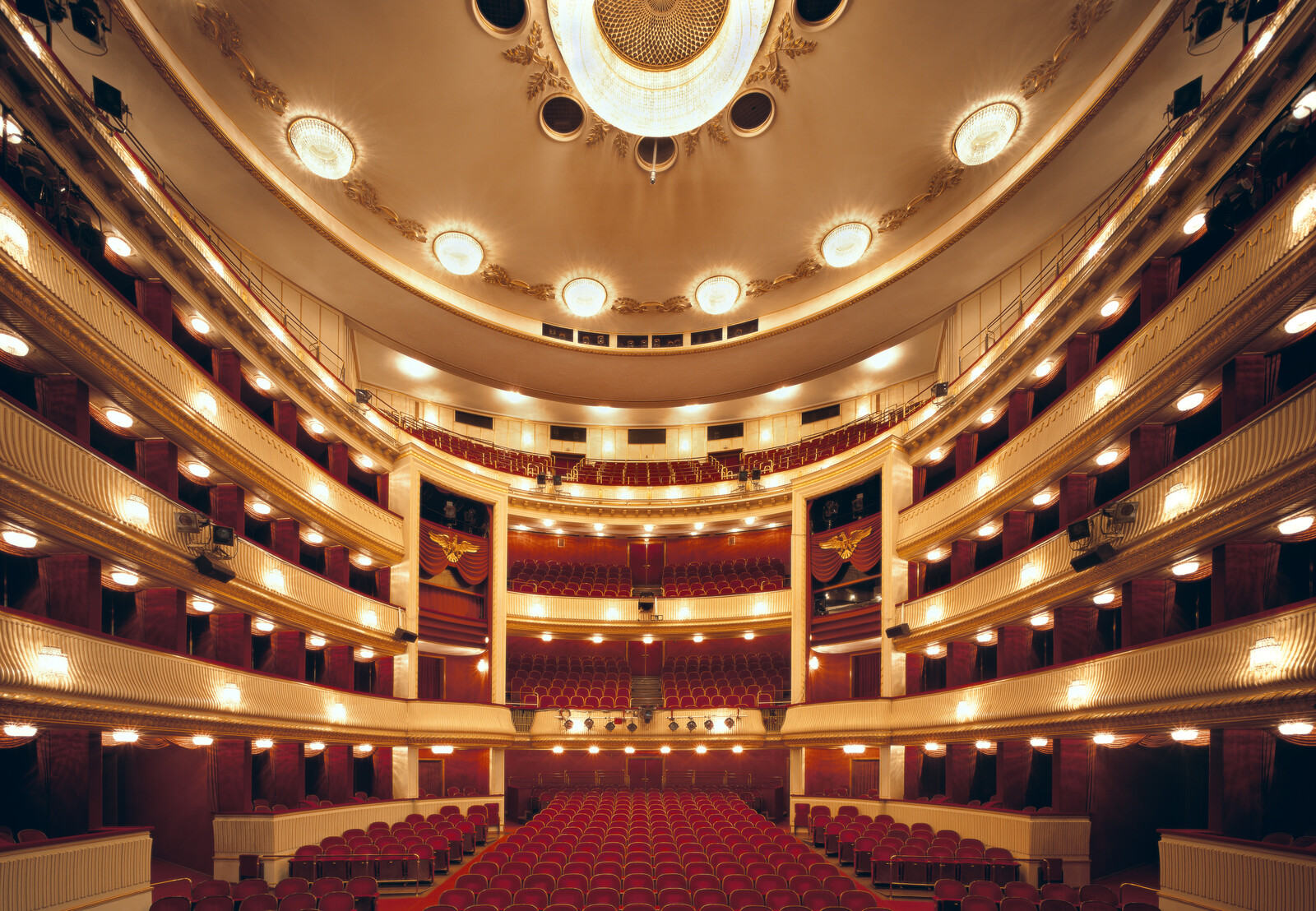
Once I found a way to deal with these issues, I could start to properly enjoy an otherwise excellent concert.
My decision to choose the "Trans Europe Express" concert deserves a bit of explanation. There wasn't much question about it really. TEE has always been my default choice for my favourite Kraftwerk album. Of equal importance, songs from "The Man Machine" and "Computer World" have been the basis of their live sets for years, whereas most songs from "Autobahn", "Radio-Activity", and TEE have been rarely played over the past two decades, if ever. If you're going to a special event that only takes place in a select few cities, why choose to hear the same songs you can hear in nearly all their regular concerts?
After buying the tickets to the show, I listened to TEE (of course) and heard things I'd never heard before. Over the past several years, I found myself listening to the modern, reconstituted touring band version of Kraftwerk (e.g. the "Minimum Maximum" DVD or other recent live shows) far more than the original albums. During a rare airing of Kraftwerk as they were thirty seven years ago, for the first time, TEE sounded weak, tinny, and lacking in punch. In contrast, "The Man Machine" has a lot more in common with contemporary electronic music -- funkier, more precise, more metronomic. This is where they first because The Robots and adopted a style and image that they'd carry with them more or less for the rest of their career. However, "The Man Machine"'s streamlined efficiency is also its biggest fault. Everything is too ordered, not a note is out of place, and there's not the slightest air of whimsy or improvisation. TEE is more varied, more cerebral, and its highs are a lot higher.
TEE is the last album where Kraftwerk's roots as a jazzy improv outfit are central to the music. It's their final attempt at preserving and advancing the style of music they broke through with. After that, the pressure to evolve was too strong and there was no way to push the old style any further. It was time to transform into something else.
For some reason, this kind of album turns out to be my favourite for a lot of notable artists. Other albums fitting into this category include Depeche Mode's "Violator", Stereolab's "Mars Audiac Quintet", and PJ Harvey's "Rid of Me". They are the last albums of those bands' "original" style before they quickly morphed into something else entirely.
On that night at the Burgtheater, even their playing seemed like a throwback to the old days. In order to play these old songs they needed to go back to being what they once were. I could see Ralf Hutter playing the chords to "TEE" (the song) on his keyboard. Kraftwerk looked like performers again and less like office workers who would prefer to send their robots on stage to do the work for them.
In fact, a quick check of the "Minimum Maximum" DVD shows that their live setup hasn't changed much. Although their work stations once had monitors that blocked the audience's view of what they were doing, in some shots you can see that they still had the same keyboards and effects modules, and you can see them physically playing the notes if you look carefully enough. But in Vienna in 2014 -- perhaps due to the venue or the set list -- Kraftwerk's world looked and sounded different for the first time in a long time.
Saturday, May 10, 2014
Fennesz, "Becs"; Swans, "To Be Kind"
Two new albums from acts with inimitable styles, returning to their noisy, bludgeoning ways that they abandoned years ago. The end results, however, are drastically different.
The newest album from the reborn Swans is the heaviest, most industrial music they've done since the 80's. "The Seer" was almost overwhelmingly massive, but "To Be Kind" somehow finds a way to shift into a higher gear. At times it's almost too much -- they've gotten the point across but keep blasting away behind all sense and sanity, until it all finally makes sense again and you're ready and willing to endure even more of what they have to throw at you. "To Be Kind" and especially the 30-minute centrepiece "Bring the Sun/Toussaint Overture" are the best examples of how relentless this album is. Up until now, if I wanted to hear Swans bathed in the metallic shards of their own sweat like these, I had to listen to crappy sounding bootlegs from the 80's.
"To Be Kind" is more "rock" than "The Seer". On the last album they relied on experimental collage pieces to fill up the two hours and give the listener a break, but "To Be Kind" is nothing but heavy and heavier, all the time. And believe it or not, these two hours flies by a lot quicker that they do on "The Seer".
-------------------------------------
"Becs" is pretty much a noisier carbon copy of "Endless Summer". You could say that Fennesz was also looking to take his music to a sort of extreme, but whereas Swans looked at their last album as a stepping stone for something biggeer, Fennesz approached "Becs" like he was doing a remake of "Endless Summer" with extra static tossed in. The starting point even could have been a low quality rip of "Endless Summer" that sounded so scratchy and distorted that he decided to use that awful sounding source as inspiration for the sequel. For the most part it works, because anything this reminiscent of that album can't help but be mostly good. Only the title track manages to hit the legendary sweet spot where the Beach Boys meet distorted guitar and frayed electronics in front of a sun that never sets.
The newest album from the reborn Swans is the heaviest, most industrial music they've done since the 80's. "The Seer" was almost overwhelmingly massive, but "To Be Kind" somehow finds a way to shift into a higher gear. At times it's almost too much -- they've gotten the point across but keep blasting away behind all sense and sanity, until it all finally makes sense again and you're ready and willing to endure even more of what they have to throw at you. "To Be Kind" and especially the 30-minute centrepiece "Bring the Sun/Toussaint Overture" are the best examples of how relentless this album is. Up until now, if I wanted to hear Swans bathed in the metallic shards of their own sweat like these, I had to listen to crappy sounding bootlegs from the 80's.
"To Be Kind" is more "rock" than "The Seer". On the last album they relied on experimental collage pieces to fill up the two hours and give the listener a break, but "To Be Kind" is nothing but heavy and heavier, all the time. And believe it or not, these two hours flies by a lot quicker that they do on "The Seer".
-------------------------------------
"Becs" is pretty much a noisier carbon copy of "Endless Summer". You could say that Fennesz was also looking to take his music to a sort of extreme, but whereas Swans looked at their last album as a stepping stone for something biggeer, Fennesz approached "Becs" like he was doing a remake of "Endless Summer" with extra static tossed in. The starting point even could have been a low quality rip of "Endless Summer" that sounded so scratchy and distorted that he decided to use that awful sounding source as inspiration for the sequel. For the most part it works, because anything this reminiscent of that album can't help but be mostly good. Only the title track manages to hit the legendary sweet spot where the Beach Boys meet distorted guitar and frayed electronics in front of a sun that never sets.
Friday, May 09, 2014
Diary of Musical Thoughts Podcast Episode 19
"A Swedish mix marched within sight of Vienna", 78 minutes
I've been wanted to record an ambient mix for quite a while ... not a down tempo mix with ambient parts, not a noisy, experimental blast of sound, but a real blissed out mix that would gently drift by as you stopped to take it in. So I set aside a few tracks, planned out the set order, and stuck with the plan almost until the end, when I couldn't help but improvise a more energetic ending.
I am less high on this mix that I was when I recorded it about two months ago, but that's probably a reflection of the season. This is a late night, winter mix, not a sunny summer afternoon one.
I've been wanted to record an ambient mix for quite a while ... not a down tempo mix with ambient parts, not a noisy, experimental blast of sound, but a real blissed out mix that would gently drift by as you stopped to take it in. So I set aside a few tracks, planned out the set order, and stuck with the plan almost until the end, when I couldn't help but improvise a more energetic ending.
I am less high on this mix that I was when I recorded it about two months ago, but that's probably a reflection of the season. This is a late night, winter mix, not a sunny summer afternoon one.
Tuesday, April 29, 2014
I bought another stack of cheap CD's. Time for some fifty word reviews.
Twenty years ago, used to drop $25-$30 on nearly every imported CD I bought. Earlier this month, I paid about $30 for fifteen CD's. Yes, times have changed. Let's have a brief look at them all and bring back the fifty word review for the first time in I don't know how long! This was sort of like Twitter in the days before Twitter!
This mixture of jazz, ambient and trip-hop could only have been released in the mid-90's. There's almost nothing to implore you to hear this album in a context other than as background music at your next mixer, but some of the kick-drum heavy grooves have some serious thump to them.
With the exception of the "Peace From Chicago Mix" (a storming track that deserves to last well beyond its already epic nine minute run time) none of these remixes deviate much from the nearly unassailable original. I had high hopes for Philippe Zdar’s mix but it’s the biggest disappointment here.
This mix is a funky, chaotic mess (that's meant to be a compliment) that should make fans of mid-2000's dancepunk reminisce and smile. Of course that means I feel like I've heard it fifty times already, and I would have said the same if I'd heard it back in 2005.
On every 90's electronica compilation, I discover at least one standout track that I haven’t heard before, and that's why I stock up on these cheapies whenever I can. Unfortunately, this disc is an exception, and even the artists and tracks I already knew sound boring in this mix’s setting.
This hypnotizing EP features four rather different styles of experimental music -- "Voices" and "Flange" are throwbacks to Morton Subotnick's futuristic bleeps, but "Untitled" treads closer to Sonic's more blissed out, organic E.A.R. project, and "Organ" could almost pass for a hummable instrumental interlude on an indie rock album.
More proof of St. Etienne's genius: their contribution to this charming covers EP could have been recorded at any time in their career and stays vaguely faithful to the original without sounding like a hungover pisstake. Flowered Up, I'm looking at you although you always make me nostalgic for 1992.
They were one of those legendary indie bands who were always spoken about in hushed whispers by people who were convinced they should have been huge and playing stadiums. Over the years I occasionally heard a song by them on the radio, but never really checked them out. Mistakes happen.
One of those iconic albums I had inexplicably never heard until now. I hadn't realized there were so many guitars here, making the Parliament half of "Parliament and Kraftwerk stuck in an elevator" stand out that much more. These guys saw the future long before the rest of us did.
Oddly enough, I was turned off from Biosphere for a long time because of his non-standout contributions to one of my favourite 90's techno contributions. More recently, mostly thanks to "Substrata", I understood that his ambient (not beat-filled) tracks are where it's at, which makes "Patashnik" mostly decent, partly sublime.
(no further information available on the 'net)
Not even sure where to start with this eclectic and often wondrous collection of music from around the globe. Approximately twenty countries are represented, with folk, reggae, and Michael Jackson covers (to name just three examples) coming from unexpected sources. Well OK, the Michael Jackson cover is by Senor Coconut.
There's always been more than a hint of Broadway in Merritt's work. Despite the nominal change in genre and format, longtime fans will immediately recognize his fingerprints here. It's interesting to hear (mostly) new voices interpreting Merritt's work, as opposed to the usual cast of characters on Magnetic Fields' albums.
This album was already my ultimate bargain bin discovery. Isn't it a great feeling when you excitedly gush about something becoming of your favourite albums after only a couple of listens, and it actually happens? "Hips and Makers" did in fact turn me into a Kristin Hersh fan for life.
[aside: strangely, WMP recalls a tracklist (and year!) which is different from the one in the liner notes, and which is different from the one listed on Discogs. The latter appears to be the correct one]
The title threatens to subject you to predictably corny "chill out" fare, but have no fear: this is exceptional 90's underwater ambient techno in the style of the best material released on R&S in that decade. Featuring a full slate of underappreciated Norwegian producers, this disc is a lost gem.
This haunting soundtrack ranges from "Mi Media Naranja"-era Labradford to creepy, abrasive ambient, like Marsen Jules locked in a basement undergoing sleep deprivation testing. When we imagined what a Trent Reznor-penned movie soundtrack would sound like in the 90's, it was a lot closer to this than "The Social Network".
The first track is nothing less than the ground zero recording that introduced me to electronic music. I bought this (imported!) cassette in '91 for the bargain price of about fifteen bucks (for years it would regularly retail for 25-30 dollars), and somehow never owned it on any other format.
Tuesday, April 22, 2014
"Mistaken For Strangers" (The National documentary, dir. Tom Berninger)
In the past couple of weeks, as the rockism vs poptimism debates heated up in print and on the internet, the National somehow became the poster boys for stodgy rock music that takes itself too seriously. The defense's timing is impeccable, as evidenced by the release of this documentary that is ostensibly about the band's 2010 world tour, but ends up as a case study about two brothers who were once inseparable, were forced apart by the unexpected success of the band, and their struggle to rebuild their relationship.
Or is it? Every review I have read (except for one) takes the film completely at face value. The story of the doofus younger brother getting his act together and making his family proud is fun to play along with, but I found myself constantly questioning whether what I was seeing was real. Could anyone really ask so many dumb questions? If he's a lone wolf filming his stupid documentary without permission, then who is holding the camera most of the time? Why would the band's management, who come off as being fun hating squares who are constantly preoccupied with protecting the National's image in documentary footage they've never seen, possibly want to green light the finished product?
In "This is Spinal Tap", the filmmaker played the naive straight man and the band were the fools. It's remarkable to think that it took thirty years for somebody to try the opposite combination.
No matter what your take, a band that chooses to "profile themselves" by foregoing all the usual rules of documentary filmmaking by agreeing to get strung along as bit players in a story of brotherly redemptions can't be taking itself all that seriously.
Or is it? Every review I have read (except for one) takes the film completely at face value. The story of the doofus younger brother getting his act together and making his family proud is fun to play along with, but I found myself constantly questioning whether what I was seeing was real. Could anyone really ask so many dumb questions? If he's a lone wolf filming his stupid documentary without permission, then who is holding the camera most of the time? Why would the band's management, who come off as being fun hating squares who are constantly preoccupied with protecting the National's image in documentary footage they've never seen, possibly want to green light the finished product?
In "This is Spinal Tap", the filmmaker played the naive straight man and the band were the fools. It's remarkable to think that it took thirty years for somebody to try the opposite combination.
No matter what your take, a band that chooses to "profile themselves" by foregoing all the usual rules of documentary filmmaking by agreeing to get strung along as bit players in a story of brotherly redemptions can't be taking itself all that seriously.
Friday, April 18, 2014
"Breadcrumb Trail" (Slint documentary, dir. Lance Bangs)
This might be the definitive "for fans only" documentary -- essential for fans of Slint and "Spiderland", confusing and utterly irrelevant for everyone else.
It struck me while watching this film that even though their music was freakish and unconventional, as a band and a collection of personalities, Slint were as cliche as any other rock outfit. The guitarist was a quiet loner who looked unassuming until he started to shred; the singer was a moody, nervous, angst-filled guy; the bassist tried to stay out of people's way and was the most invisible, underappreciated band member; and the drummer was an out of control weirdo. I guess you could say that about 99% of bands though. The story tends to repeat itself -- on record they were dour and serious, but in real life, they were young kids having fun. The former members and entourage of Joy Division let their myth build up over the years before eventually clueing fans into the fact that they were getting drunk and laughing their asses off most of the time. Now it's Slint's turn.
"Breadcrumb Trail" is almost entirely composed of interviews. It's an oral history told in front of a camera, but the principals get plenty of face time so by the end of it you feel like you've had a fairly intimate look at the personalities of everyone involved. The snippets of archival footage is outstanding and really attunes you to how young and how talented Slint were (and how pretentious ... tuning up for 1.5 hours at a high school "Battle of the Bands" show? Totally dickish but also hilarious).
The major flaw of the documentary is that the breakup of the band in 1991 is mostly glossed over. Maybe they wanted the subject to be off-limits, maybe they wanted to keep mum about it (even after twenty years) to add to their mystique, maybe they don't want to open old wounds in the interest of keeping their occasional reunion gigs going. Still, it's odd considering the level of detail in the rest of the film.
It struck me while watching this film that even though their music was freakish and unconventional, as a band and a collection of personalities, Slint were as cliche as any other rock outfit. The guitarist was a quiet loner who looked unassuming until he started to shred; the singer was a moody, nervous, angst-filled guy; the bassist tried to stay out of people's way and was the most invisible, underappreciated band member; and the drummer was an out of control weirdo. I guess you could say that about 99% of bands though. The story tends to repeat itself -- on record they were dour and serious, but in real life, they were young kids having fun. The former members and entourage of Joy Division let their myth build up over the years before eventually clueing fans into the fact that they were getting drunk and laughing their asses off most of the time. Now it's Slint's turn.
"Breadcrumb Trail" is almost entirely composed of interviews. It's an oral history told in front of a camera, but the principals get plenty of face time so by the end of it you feel like you've had a fairly intimate look at the personalities of everyone involved. The snippets of archival footage is outstanding and really attunes you to how young and how talented Slint were (and how pretentious ... tuning up for 1.5 hours at a high school "Battle of the Bands" show? Totally dickish but also hilarious).
The major flaw of the documentary is that the breakup of the band in 1991 is mostly glossed over. Maybe they wanted the subject to be off-limits, maybe they wanted to keep mum about it (even after twenty years) to add to their mystique, maybe they don't want to open old wounds in the interest of keeping their occasional reunion gigs going. Still, it's odd considering the level of detail in the rest of the film.
Sunday, April 13, 2014
Outkast reunites at Coachella 2014
Andre 3000 summed it up perfectly when their 90-minute set was abruptly cut off due to curfew -- this was "kind of weird". Yes, he was referring to the halting of their set when they thought they were getting to the big finish with Killer Mike, but he could just as easily have been talking about the entire night.
The audio glitches were the least of their problems. I didn't like Dre and Big Boi spending so much time inside the screen-lined cube. It felt like they were trapped there and I couldn't figure out why it added to the performance when they were prevented from using the entire stage. The timing and pacing of the set felt completely off, with some songs getting inexplicably shortened ("Ms. Jackson"? Huh?), and the set never built properly to the hits that people expect to hear at these kinds of shows. After all, the Outkast reunion is taking place at festivals, and you have to tailor your set to a broad festival goer audience, not the most hardcore thousand or so fans in every town. They brought out Janelle Monae and Future to almost no reaction, because this wasn't the sort of crowd that would know who they were. Somehow they seemed surprised by this.
Of course there were high spots -- the horn section, "Roses", "Rosa Parks" and Janelle Monae's guest spot (even if the crowd didn't care) to name a few, but overall this concert was a shockingly unpolished work in progress.
Wednesday, April 09, 2014
The decline of downloads
Great article in Billboard about the competition between Apple and iTunes on one side, and the double threat of streaming services and Google's stranglehold on mobile devices.
Here is a graphical history of sales (as a percentage of total units shifted) for the various music formats. CD's passed cassettes as the top format from 1990 onward, but interestingly enough, IIRC, 1989 (or perhaps even 1990) was the top year for total cassette sales. IOW, when cassettes hit their peak in terms of total sales they were oddly enough already on the decline -- a decline that came swiftly and definitively. I believe the peak for CD sales occurred in 2000, although the graphs show that the CD reached its peak in terms of percentage of total sales in 2002-3. So one could equally claim that when CD's hit their peak around 2002, they too were on the decline -- a decline that came just as swiftly and decisively as it had for cassettes not much more than a decade previous.
CD's ruled the industry for not more than twelve years. Total download sales didn't pass physical sales until 2012, but by that time the CD had been dead as the leading format for years. Downloads and streams (both legal and otherwise) were taking over and there was nothing anyone could do about it, but the industry found a way to squeeze more juice out of the very profitable CD model before finally admitting defeat, kicking and screaming.
Downloads will not rule the industry for nearly as long. The pie charts show that the rise of streaming/subscription services and legal downloads happened roughly simultaneously, so it's arguable whether they ever really dominated music consumption at all. But iTunes has been crushing the competition in the download market, that part is indisputable. But as the Billboard article explains, they're rapidly losing market share to streaming services, which should come as a shock to no one because once you've weaned people off the idea of buying music as a physical object, you can't expect any brand loyalty from consumers who are accustomed to thinking about songs as faceless, invisible objects. No matter which site you get your music from, it's all the same mouse click, there's no aesthetic or sentimental reason to prefer one website to another.
If you thought the CDs' decline was swift, that was nothing compared to what's going to happen with downloads. Download sales may have peaked around 2012, but like CD's and cassettes before them, that doesn't mean that the format wasn't already in decline. Things were never the same after the iPod was introduced. It showed that music as a physical object to be purchased in a store was on the way out -- the future would be based around playback devices. Apple, of all companies, should understand this. So in 2014, that means mobiles and tablets, and Apple will have to shift its way of thinking, and fast.
I still remember the day in 1990 when I was listening to CFNY in Toronto and the DJ (forgot who, but I believe it was early afternoon on a weekday in the summer) talked about some pie-in-the-sky news/tech-y story about how in the future we wouldn't buy our music, we'd have a service (perhaps envisioned as a satellite-based service at the time) that would play our music on demand for us. And I couldn't even imagine how it could possibly happen one day.
Here is a graphical history of sales (as a percentage of total units shifted) for the various music formats. CD's passed cassettes as the top format from 1990 onward, but interestingly enough, IIRC, 1989 (or perhaps even 1990) was the top year for total cassette sales. IOW, when cassettes hit their peak in terms of total sales they were oddly enough already on the decline -- a decline that came swiftly and definitively. I believe the peak for CD sales occurred in 2000, although the graphs show that the CD reached its peak in terms of percentage of total sales in 2002-3. So one could equally claim that when CD's hit their peak around 2002, they too were on the decline -- a decline that came just as swiftly and decisively as it had for cassettes not much more than a decade previous.
CD's ruled the industry for not more than twelve years. Total download sales didn't pass physical sales until 2012, but by that time the CD had been dead as the leading format for years. Downloads and streams (both legal and otherwise) were taking over and there was nothing anyone could do about it, but the industry found a way to squeeze more juice out of the very profitable CD model before finally admitting defeat, kicking and screaming.
Downloads will not rule the industry for nearly as long. The pie charts show that the rise of streaming/subscription services and legal downloads happened roughly simultaneously, so it's arguable whether they ever really dominated music consumption at all. But iTunes has been crushing the competition in the download market, that part is indisputable. But as the Billboard article explains, they're rapidly losing market share to streaming services, which should come as a shock to no one because once you've weaned people off the idea of buying music as a physical object, you can't expect any brand loyalty from consumers who are accustomed to thinking about songs as faceless, invisible objects. No matter which site you get your music from, it's all the same mouse click, there's no aesthetic or sentimental reason to prefer one website to another.
If you thought the CDs' decline was swift, that was nothing compared to what's going to happen with downloads. Download sales may have peaked around 2012, but like CD's and cassettes before them, that doesn't mean that the format wasn't already in decline. Things were never the same after the iPod was introduced. It showed that music as a physical object to be purchased in a store was on the way out -- the future would be based around playback devices. Apple, of all companies, should understand this. So in 2014, that means mobiles and tablets, and Apple will have to shift its way of thinking, and fast.
I still remember the day in 1990 when I was listening to CFNY in Toronto and the DJ (forgot who, but I believe it was early afternoon on a weekday in the summer) talked about some pie-in-the-sky news/tech-y story about how in the future we wouldn't buy our music, we'd have a service (perhaps envisioned as a satellite-based service at the time) that would play our music on demand for us. And I couldn't even imagine how it could possibly happen one day.
Subscribe to:
Posts (Atom)