Wednesday, November 28, 2012
Microscopic royalties and the golden age of CDs
Damon Krukowski of Galaxie 500 and Damon & Naomi caused a bit of controversy last week by writing an article about the meager royalties fees paid out to artists by streaming sites like Pandora and Spotify. Some people got worked up over it, told him to stop whining and go on tour if he wants to make money, and writers like Maura Johnston penned rebuttals to the rebuttals.
Like with most mini-controversies, this one is less of a big deal than it's been made out to be. First of all, Krukowski wasn't really railing against the current state of things. Obviously he wouldn't object to pocketing more money each time someone streams one of his songs, but he wasn't using his article to say "pay me" either. He didn't say that he was against the streaming sites -- I'm sure he gets his time and money's worth from his Spotify subscription. His concluding point, after having run through the math to justify his position, was that he'd accepted the fact that he wasn't ever going to earn significant money from streaming his songs. That's why he's offering his own streams completely free of charge. He's never going to be able to buy much more than a six pack of beer from his streaming royalties, so why not just give the music away for free through his own site, increasing his web traffic and giving fans easier access to his music all in one shot?
Artists are earning a pittance but the streaming sites are losing a small fortune every year and aren't looking like they'll turn a profit anytime soon. Krukowski says they "exist to attract speculative capital", i.e. like an overinflated stock, their services/products aren't worth much but the company is. So if they're not really in the business of music, and are in fact undermining the recording, pressing, and selling of music as Krukowski claims, then how are they worth anything at all? He doesn't say, but the answer is obvious. Spotify is worth something for the same reasons that Facebook is -- they're in the business of building databases of information about their users. The site's actual services are worth very little, but information about their millions of users' listening, purchasing, and social habits are worth a fortune. It's even quoted right there in Krukowski's article, when Spotify CEO Daniel Ek says that "our focus is all on growth", he's not talking about diversifying the selection of music they offer, it's about growing and diversifying their user base.
Anyway, some people misinterpreted Krukowski's acquiescence as complaining and commented that he should tour more rather than trying to make a living off selling records and CDs. That's easier said than done, no question about it. Organizing a tour is a lot of work, there are plenty financial risks involved, and I can't disagree with anything Maura wrote. But these aren't the real issues here. The core of the debate is no different from the David Lowery/Emily White spat from several months ago, and my opinions on that haven't changed. Music is a high risk, high reward business, and not everyone living in every city in the world will be able to make a living off it. That's the way it's always been, and that's the way it always will be. Trying to reconfigure the industry so that bands can see an increase in revenue for doing the same work isn't financially viable.
I agree that it's not a fair industry in that artists have always had to accept the short end of the stick in their battles with record company management. But the digital/streaming genie isn't going back in the battle, and I've never understood what musicians' long term plan is supposed to be to combat that. Of course musicians want to be better compensated for their work, so what's their proposed solution? Should albums cost $20-25 again, like in the early days of CDs? Do artists need to pursue more liscencing agreements with TV shows and advertisers in order to subsidize their music careers? What about more government support for musicians, possibly in the form of arts grants? Lowery chatted to The Awl a free months ago, complained about the state of things, said that musicians should be able to support themselves, and suggested no solutions for doing anything about it. When the Amanda Palmer/Kickstarter experiment was brought up he basically ridiculed it. I'm not going to get into the Amanda Palmer thing here, but at least she tried doing something a bit different, something that circumvented the usual revenue streams.
If this post hasn't depressed or frustrated you too much, now it's time to take a break and relive the glory days of the CD by celebrating it's 30th birthday with Pitchfork. Enjoy the nostalgia, and try not to dwell on all the money you invested on overpriced CDs!

Saturday, November 24, 2012
Godspeed You! Black Emperor, "Allelujah! Don't Bend! Ascend!"; Jon Spencer Blues Explosion, "Meat and Bone"
Check your calendars ... yes, it's 2012, not 1999.
You'd think that as time drags on, music would be less likely to truly surprise us. The more you see, the more the unexpected becomes expected, or even common. Bands make comebacks all the time, sometimes they're successful, sometimes they embarrass themselves, but both paths are already well traveled.
I hadn't heard that JSBX had reunited. Proper bluesmen either never seem to age, or if they do age, they get cooler and more badass as they get older. Either way, they play forever, or until they physically can't anymore. But JSBX were never proper bluesmen. They were punks who loved the blues whose gigs were sweat and beer soaked medleys of songs that often weren't much more than repetitively shouted slogans. They were fantastic both on record and on stage for several years in the 90's, whose cred was partly fueled by whatever they could siphoned off sometime collaborators like Beck and Beastie Boys. Anyhow, it was a safe assumption that the indie blues revival, like nu-metal or swing or other brief 90's trend, would have a short shelf life. JSBX knew it too, which is why they experimented with proper songs and real producers starting with 1998's "Acme". But the magic was destined to fade away and they finally went on hiatus several years later. Many formerly devoted fans probably couldn't have told you exactly what year that was.
They returned to the stage in 2010 for some one off shows, which must have been well received because they started playing live more and more frequently thereafter. You might have thought that these 40-somethings were too old to still pull off all their old shit, I mean sure, bands reunite all the time but this isn't Culture Club playing MOR pop with an occasional harmonica solo, this was the Jon Spencer Blues Explosion who were supposed to be ripping it up on stage and throwing their bodies all over the place. Based on some of the evidence it seems they've toned things down a bit but you used to feel tired just thinking about one of their gigs, so can you blame them for mellowing a little?
But the new album couldn't possibly be any good. Maybe there'd have a chance if it was hip-hop tinged funky blues made for driving around on Sundays, but if you told me that they there attempting to record a throwback to the savagery and trashiness of "Now I Got Worry", I would have dismissed it as an idea that was clearly dead on arrival.
And yet, they did it, they made that album and it's good. It might not have hooks and catchy slogans that compare with their best work of a decade and a half ago, but it's brimming with energy, packed with cool riffs and crazy mid-song rhythmic changes, plenty of theremin solos, and is generally a fantastically fun 40-minute rollercoaster ride of Blues Explosion goodness without a boring moment. It wouldn't be fair to trot out the clichéd comment that longtime fans won't be disappointed. This album will exceed your expectations. By a lot.
----------------------
GY!BE reunited a couple of years ago and have been touring steadily since their comeback at All Tomorrow's Parties (which they also curated). At some point earlier this year, they found the time to record a new album basically in secret. Somehow the very existence of "Allelujah! Don't Bend! Ascend!" was virtually unknown until days before its release. Suddenly, GY!BE had come all the way back, with tours, a new album, and the best reviews of their career.
Maybe I could have anticipated all of that in some alternate reality, but I definitely wouldn't have foreseen them becoming culturally relevant. Who saw that coming? GY!BE used to be one of the most divisive bands around. You either thought they were one of the most emotionally powerful bands bands ever, a cinematic tour-de-force and the vanguard of the indie anti-establishment; or pompous Glenn Branca ripoffs whose songs dragged on for forever and a half. But even their biggest fans, and I was certainly one of them, thought their politics were crap. Even their most devoted fans wouldn't stan for the ideas of a collective of reclusive figures who wouldn't let up about American imperialism and society's endless downward spiral. They were too heavy-handed even in the immediate post-9/11 age of pessimism and paranoia, which is saying something. But skip forward ten years, and suddenly, protests and reactionary politics aren't just the stuff of bearded weirdos. Between the Occupy movement and the massive student protests that dominated the news all year in their native Montreal, protests are a thing again and GY!BE are the role models providing the best soundtrack for the changing times (reviews like the two I just linked didn't exist during the first phase of their career) . The fact that most of "Allelujah! Don't Bend! Ascend!" consists of old material that was kicking around in their live sets nine years ago is irrelevant, in fact, it probably only enhances their image as the prophetic band who saw the future coming before anyone else did.
But the best thing about "Allelujah! Don't Bend! Ascend!" is that GY!BE finally managed to record themselves properly, capturing the brain-melting ferocious power of their live shows on a studio recording for the first time.
Wednesday, November 21, 2012
Music stores in Milan, plus SPIRITUALIZED (with Roy and the Devil's Motorcycle) live in Milan at Magazzini Generali HELL yeah
After an afternoon of searching (mostly in pouring rain), I finally located the best music store in Milan -- Serendeepity. They focus mainly on electronic music, particularly house and techno. I flipped through impressively stocked rows of compliation CD's (both new and classic), new releases, and heavily discounted discs, eventually picking up stuff by Conforce, Tiga, Stefan Goldmann, and a few others. I barely scratched the surface of their vinyl stock, because what's the point? I don't have access to my vinyl collection or turntables so why set myself for disappointment by salivating over music I can't buy? Later on that day, I stumbled upon another cool store, Dischi Volanti, completely by accident when I was searching for a place to hide out from the pouring rain while waiting for the aperitivo bars to open. It's a second hand vinyl and CD store that mostly stocks jazz and rock, but they also had a few shelves devoted to experimental, ambient, and industrial music, most of it at least 10-15 years old. I felt transported back in time to a sale at Amoeba or the Record Peddler (RIP) in the 90's.
But the highight of this trip to Milan, musically speaking, was getting to see Spiritualized live for the ninth time on Sunday the 11th. There's nothing to make me feel more aware of the incomprehensible passage of time than the realization that it had been over nine years since I last saw SPZ, or put another way, more time since the most recent show than it took me to see them the first eight times.
Before that was a transcendent set by Roy and the Devil's Motorcycle. First, a couple of quick notes about Italian crowds (or at least about this Italian crowd). The hour of the concert, i.e. what is written on the ticket or in the newspaper, is the time the concert actually starts. And by concert, they mean the main act. If there's one thing I hate about concerts, it's always having to guess at what time to show up based on some combination of band and venue and time that people will decide to show up. In Italy, the listed time corresponds to a realistic start time, and the opening act hits the stage one hour before that. But this meant that Roy and the Devil's Motorcycle had to start shortly after 8 PM, with not more than twenty or thirty people in attendance. In Toronto, nobody would be caught dead within 50 feet of the stage in a mostly empty concert hall. But in Milan, everybody stood up -- no matter where they'd been sitting anywhere in the room -- and walked to the front as soon as the band appeared on stage. How about that, respect shown to the artists who came to entertain them ...
Roy and the Devil's Motorcycle certainly earned it. Their first song was a spot on homage to CCR -- if CCR had been a Krautrock band. I think that's yet another great musical idea that AFAIK nobody had ever thought of ... the world didn't know it needed a Krautrock CCR and how could a band like that be anything but good. Then they started rocking out John Lee Hooker style, with a heavy bluesy twang despite the lack of a bass player, with three guitar players hammering out Spacemen 3-like riffs right down to the uncanny ressemblances to S3's "Suicide".
The key turning point in SPZ's career happened between two legs of the tour in support of "Let It Come Down". Not like anyone realized it at the time. Fans were used to Jason's constant tinkering with the lineup and with live versions of his songs, so the changes didn't really register. But the fall 2001 incarnation of SPZ was still a maximalist space rock outfit, committed to creating the most overwhelming blast of sound possible by augmenting the regular band with singers and brass. It was a pint-sized version of the 100-strong collective that participated in recording "Let It Come Down", if Jason could have taken 100 people on tour with him, he would. Whereas the SPZ that emerged in spring 2002 was a more stripped down ensemble, now minus the brass and all the other bells and whistles, that played crisp Velvet-y rock with the occasional gospel ballad. And in the ten years since then, on every subsequent album and tour, they've entrenched themselves deeper into that mold. It's as if they took ten years to figure out what kind of band they wanted to be, spent the next ten years trying to perfect that sound, and yet judging by Drowned In Sound's recent interview with Jason, he still can't figure out exactly what he wants to do next.
That odd mixture of confidence and uncertainty was clearly evident when they were on stage. The wibbly improv interludes and noise freakouts used to be the glue that held their sets together. Now they feel out of place. This version of the band is too rehearsed, right down to their carefully coordinated choice of stage attire (all the bands members in black at stage left and centre, Jason and the backing singers dressed in white at stage right). I'm not convinced they enjoy jamming at this point in their careers, but they feel obligated to do it as part of the show. Most of the time I found myself wishing they'd stop wasting time and skip to the next song. It was often more interesting for me to hear silence -- silence!! -- between songs, because it was something I'd never experienced at a SPZ concert before. No guitar noodling or "pure phase" drones, just complete silence between songs, like with most other bands!
For the most part, that summarizes the first half of the concert. It was dominated by songs from "Sweet Heart Sweet Light", which according to Jason in the DiS interview, is an album he doesn't listen to and isn't even sure if he likes, partly because he was so miserable when he recorded it. "I Am What I Am", one of my least favourite songs on the album, packs a terrific groove live, which was one of the few surprises from the "Sweet Heart Sweet Light" songs they played. The bass was unfortunately mixed too high for most of their concert set, but this is one case where this sonic annoyance actually helped a song along.
The second half of the concert was like watching a completely different, more focused band. Maybe they needed the first hour to get warmed up. The first new song was a ferociously sludgy one chord blues, something that Jason hasn't played on since S3's "OD Catastrophe". The second new song was the sweetest, most direct love song Jason has ever written (working title seems to be "Perfect Miracle"). It was also more than a bit corny, which is both the principal fault and the primary appeal of the song, i.e. it's so cloying and awkward that you won't be able to stop humming it. It could be a minor hit off the back of a Wes Anderson movie. Anyway, another intriguing surprise.
The final section was a throwback to the SPZ of old, proving that they can flip the switch and turn into the improv-heavy space rock worshippers of years past whenever they want. Incendiary versions of "Take Your Time" and "Electric Mainline" closed the main set, and for the encore, they returned with "Come Down Easy" (!!) and "Smiles". I'm almost certain that they haven't played "Come Down Easy" as Spiritualized before (excepting the handful of shows from earlier on the fall leg of their tour). Looking forward, or looking back, what's next for this band? Jason says he doesn't know, and based on this concert, I believe him completely.
Setlist:
Hey Jane
Electricity
Heading For the Top
Freedom
I Am What I Am
Mary
Ladies and Gentlemen We Are Floating In Space
So Long You Pretty Things
new
new
Take Your Time
Electric Mainline
----------
Come Down Easy
Smiles
approx. 2 hrs
Saturday, November 10, 2012
The end of the 80's
Every time I travel to Europe it seems as though I discover a great music video channel completely by accident. In the breakfast room of my hotel in Milan, the TV is usually tuned to a channel that plays a mix of 80's and 90's videos every morning (and perhaps all day long, if the ads on this channel are any indication).
Every day I eat my breakfast to a mix of Italian pop songs and videos I haven't seen in ages, if at all, even by bands I really like(d). I'm not sure I'd ever seen the video for Def Leppard's "Women", and I listened to "Hysteria" about a billion times in '88-'89 and thought I'd seen every video made from that album.
One morning I heard these three songs in less than half an hour and could have sworn they were all released in the same year:
Basia - New Day for You
Aretha - A Deeper Love
Enigma - Age of Loneliness
Of course they weren't all released in the same year, and I already knew they weren't, but a first time listener could have been fooled into thinking they were. I had absolutely no recollection of Aretha having a hit song and video in the 90's, and would have pegged this for no later than '90-'91 based on the music alone. The video, featuring clips from "Sister Act", was my only giveaway that I was listening to a mid-90's song. So it had to be at least the second time I'd heard "A Deeper Love" because I did see "Sister Act" in the 90's (unfortunately), but for all intents and purposes I was a first time listener and I know the watered down NYC-house music style from 1990 when I hear it. Enigma released some great music over the years (I was freakishly into "Sadeness Part 1", I'll still stan for it if prompted) but "Age of Innocence" isn't their finest moment. And Basia's "New Day For You" is a well crafted 80's dance pop number that has aged surprisingly well.
As a side note, I think people often place most pop music within a narrow British/American frame, or alternatively, originating from countries where English is an official language (i.e. incl. Canada, Australia, Ireland ...). We think we only see acts from those countries showing up on charts everywhere in the world, whereas every other country's music is relegated to their own national charts, never to be heard or seen elsewhere in the world. In this musical world view (which may not be as prevelant as I'm assuming) there are few exceptions (e.g. ABBA) outside of the occasional international fad/punchline (e.g. "Macarena"). But 80's and 90's pop had plenty of international acts. There were the Eurodance acts, obviously, and Ace of Base, Basia (Poland), Enigma (Germany via Romania), and many more.
Obviously the 80's didn't end, musically speaking, on New Years day 1990. It took a while for the sound we associate with the 80's to peter out, just like Nirvana didn't complete their takeover of alternative radio in a day. So how long did the 80's last anyway? Those Enigma and Aretha Franklin songs were from 1994. Enigma were a 90's phenomenon if there ever was one, but "Age of Loneliness" feels like something too primitive for the 90's (maybe it's because of the chanting).
A lot of artists who had hit albums in the late 80's were able to carry their success into the 90's without changing hardly anything about themselves. Prince, Paula Abdul, and Janet Jackson were still wildly successful, and Duran Duran actually made a comeback in the early 90's! So what killed the 80's for good?
I really don't know. Some ideas:
-- Mariah Carey and Boyz II Men releasing one interchangeable ballad after another, driving the electro and dance elements completely out of R&B.
-- MOR "alternative" rock like Semisonic making the leap from alternative to mainstream radio and taking the spots of the legacy rock acts like Bon Jovi and Bryan Adams. Of course those guys would have the last laugh by staging huge tours in the 00's and earning enough money to buy back every Smashmouth album at full retail price (90's retail price even!) and destroy them forever in a massive CD bonfire, but we're talking about the charts and radio playlists now.
-- Country making a huge comeback in sales and popularity, causing non-grunge rock to be pushed into the background. New rock bands had to wear flannel or go at least a little bit country, never forget that Hootie and the Blowfish were heard everywhere in the 90's.
-- Major acts with dance music credentials such as Madonna, Whitney Houston, and Annie Lennox switching directions and trying to sound more "adult", leaving behind a vacuum on the charts that was filled by the very different sounding Eurodance acts.
EDIT: The morning after posting this, I saw these two videos:
Van Halen -- Right Now
Dire Straits -- On Every Street (live from what appears to be a Roman amphitheatre, most probably was in the Arena of Nîmes since I see they recorded some of the "On The Night" video there)
EDIT: The morning after posting this, I saw these two videos:
Van Halen -- Right Now
Dire Straits -- On Every Street (live from what appears to be a Roman amphitheatre, most probably was in the Arena of Nîmes since I see they recorded some of the "On The Night" video there)
Another pair of very interesting examples! Specifically, what happened to Dire Straits in the 90's? They'd gone from big to huge in the 80's and adapted well to the new reality of MTV by releasing some one of the decade's most iconic videos. Among rock acts, perhaps only Springsteen was bigger and more successful in the mid-80's thanks to the phenomenal success of "Brothers In Arms". It's been suggested that they killed their momentum by waiting too long to release the follow up to "Brothers In Arms" (seven years), but I've never bought into that. It's not unusual for artists to take time off and come back as big as ever. Maybe we should take the Occam's razor approach ...
-- Running in place. Give or take a saxophone solo here and there or Mark Knopfler's choice of headgear, that video for "On Every Street" could have been shot at nearly any point between 1978 and 1992. People get tired of bands that stick to only one thing, no matter how much they excel at it. U2 and Depeche Mode are two examples of 80's giants who completely changed their look and music entering the 90's, kept fans and curiosity seekers guessing, and became even more successful because of it. They returned to their more traditional sound in the 00's but after more than twenty years of making music headlines they were practically bulletproof. Every move they make is a big deal because an entire generation of fans has grown up with them as a Big Deal. See also: Madonna.
Ah, but what about Van Halen? They had a number of hit songs and albums in the 90's, and their sound is as constant as it gets. But they did change, sort of. After a rough transition period, Sammy Hagar was firmly entrenched as their new singer by the start of the 90's. Eddie van Halen's solos might have sounded more or less the same, but Hagar was the right guy in the right place at the right time to help with the shift from the cartoony, testoterone filled David Lee Roth era to the more politically conscious "Right Now" era. Van Halen might have become a punchline without the slight attitude and personnel changes. Consider AC/DC, another band whose music was as constant as they come but were spent as a chartmaking force after 1990's "Thunderstruck" (although of course they continued to clean up on the tour circuit).
Monday, October 29, 2012
Ricardo Villalobos, "Dependent and Happy"
I've spent a few hours with Ricardo Villalobos' newest album. First I listened to it all the way through while scrolling through news and sports articles on the internet. It was a bunch of fluffy, light reading that didn't require a lot of concentration, and the music was a perfect backdrop to that because it doesn't require a lot of energy to absorb it. Villalobos doesn't usually inspire deep listening, if you want to, the music can just be there, as bland and unnoticeable as elevator music in the supermarket if that's the way you want to approach it.
Later on I went back and listened to it more closely. None of its twelve mostly lengthy tracks jump out at you, they don't suddenly take off like "Ichso" does about three minutes in, for instance. But that's OK because nobody ever accused "Alcohofa" of "taking off" either.
Closer listening reveals all sorts of interesting details bubbling below the surface, which of course is typical for Villalobos' music. There are countless little snippets of percussion and voice, sometimes featured as a blissed out melody cruising alongside the steady, insistent beat, and sometimes chopped up into nearly infinitesimal bits. I'm partial to the odd, circular synth melodies on "Zuipox" because they sound exactly like something that would have appeared on a mid-90's Autechre album, but then again, I would be. The closing track, "Ferenc", stakes one of the more muscular beats on the album to an eerie ambient hum, all of which would have been very much at home on a 90's Warp Records release (most likely the Polygon Window album).
But too much of "Dependent and Happy" is basically just there, coasting by in one long and drowsy 100-minute techno suite. Villalobos rarely hesitates to do in ten minutes what can be done in five, and it's only on aforementioned tracks like "Zuipox" (which transforms itself halfway through) and "Ferenc" (which is short enough to not overstay its welcom) that he offers any surprises that don't require a great deal of patience to appreciate. This is the kind of album whose tracks I would frequently skip if they randomly came up on a playlist, because there are only so many ten minute minimal techno tracks you can sit through before you start looking for something more hook-filled to entertain you and hold your attention.
Later on I went back and listened to it more closely. None of its twelve mostly lengthy tracks jump out at you, they don't suddenly take off like "Ichso" does about three minutes in, for instance. But that's OK because nobody ever accused "Alcohofa" of "taking off" either.
Closer listening reveals all sorts of interesting details bubbling below the surface, which of course is typical for Villalobos' music. There are countless little snippets of percussion and voice, sometimes featured as a blissed out melody cruising alongside the steady, insistent beat, and sometimes chopped up into nearly infinitesimal bits. I'm partial to the odd, circular synth melodies on "Zuipox" because they sound exactly like something that would have appeared on a mid-90's Autechre album, but then again, I would be. The closing track, "Ferenc", stakes one of the more muscular beats on the album to an eerie ambient hum, all of which would have been very much at home on a 90's Warp Records release (most likely the Polygon Window album).
But too much of "Dependent and Happy" is basically just there, coasting by in one long and drowsy 100-minute techno suite. Villalobos rarely hesitates to do in ten minutes what can be done in five, and it's only on aforementioned tracks like "Zuipox" (which transforms itself halfway through) and "Ferenc" (which is short enough to not overstay its welcom) that he offers any surprises that don't require a great deal of patience to appreciate. This is the kind of album whose tracks I would frequently skip if they randomly came up on a playlist, because there are only so many ten minute minimal techno tracks you can sit through before you start looking for something more hook-filled to entertain you and hold your attention.
Friday, October 26, 2012
Another link roundup (mid-October edition)
The first two are courtesy of RA's news feed:
1. One normally finds links to mixtapes and newly released underground club tracks on the blog "The Head of Rothchild". They also enjoy the occasional slog through the crappiest music one can find over the internet, posting audio, video, and photo links for us to point our fingers and laugh at. I'd never heard of them until I saw their post on corny DJ photo shoots. The intentional send-ups at the end of the post are actually not any more ridiculous than the real promo shots. I can't for the life of me figure out what the guy in the first picture is supposed to be doing. Is he pissing on his record collection through the hole in that fluorescent green disc?
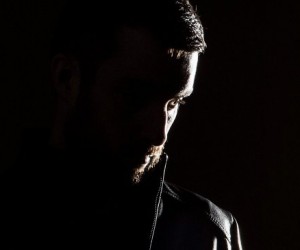
These photos don't look anything like actual DJ promo shots, so they can't even say that they were trying to steal from the pros and just overused the usual cliches. They only have themselves to blame ... and that's saying something, because DJ promo pictures are unbelievably cliched and uncreative. For instance, there's the "DJ covering his eyes" shot, and the million varieties of "serious and forlorn". The most popular one is where the DJ looks off to one side, completely away from the camera, with his face partly in shadow. These are just a few examples, but trust me, this is one case where the truth is nearly as bad as the parody.

2. An interview with Jeff Mills ... in Forbes!! I love the description of him in the title - "artist, producer, DJ, and entrepreneur". It is Forbes after all, so he's an "entrepreneur" and much of the discussion is devoted to his company/label's business model. I can only imagine what the stock watchers thought when they saw this article. Mainstream music publications are still obsessed over album sales figures -- how much did such and such an album sell in its first week, etc. What they consider "success" is still associated with a business model that is decades old. Sometimes you see lip service paid to other versions of "success", like the free downloads as loss leaders strategies of Nine Inch Nails and Radiohead, and Youtube views. But I think most of them still don't get it. A song like "Gangnam Style" became a worldwide phenomenon, complete with iconic dance, hundreds of millions of Youtube views, PSY guest spots on American talk shows, flash mobs, countless tribute and parody videos, etc. Despite all that, before it had started to make a dent in the charts outside Asia, a lot of music industry people wouldn't have considered it a "success". At least not until it started racking up actual sales and downloads, which it eventually did, topping the iTunes download charts and pop charts in dozens of countries. Now they'll just point to its iTunes ranking as "proof" that it was a hit, and ignore all that other stuff that made it a huge phenomenon -- stuff that's a lot more significant if you ask me.
Forbes and Tamara Warren, the journalist who conducted the interview, get it. Mills comes across as the savvy head of a music and merchandise company that's keenly in tune with the changing needs of its customers. Most actual music publications don't.
3. Last week I thought I wrote a fairly inspired review of a concert by a legendary 80's music group. I tried to put the passage of time in perspective while trying to capture what makes them and their tour so special for longtime fans. Then I saw this review of Morrissey by Hua Hsu on Grantland, which tackles much the same angle and of course blows my writing out of the water.
Not only that, his point is much more interesting and profound than mine. Me = we get older and so do our favourite bands, how do both of us reconcile our current and past selves? Nothing wrong with that, but it's hardly an original concept (which I knew, but still wanted to tell the story in that way. But Hsu notes that these tours are partly about musicians playing the characters their fans expect them to play. In the process, they blur the lines between those characters and their actual selves, and at the end of the day, who knows who is the real artist, who is the character that does what he can to collect the ticket money, and when the former morphed into the latter? I don't think this happened with earlier generations of artists. It's not like Led Zeppelin turned out to be asexual homebodies who hated the blues. CCR didn't admit they were pro-war all along and just went along with what the hippie crowd wanted so they could sell a few records.
Then you have artists like Morrissey and Robert Smith. They were icons owing to a simple, almost parasitic formula. They felt lonely, depressed, and isolated. They wrote songs that expressed those feelings. Their fans, who were also lonely, depressed, and isolated people who felt especially alienated by the plastic 80's music, idolized them because they perfectly understood everything they were feeling in their everyday lives. And that's how The Smiths and The Cure built such a loyal following.
At least that's how the story goes. But at some point, writing those kinds of songs in character became the most natural thing in the world for them, just like any fiction writer would put him or herself in the shoes of the characters in one of their books. We can believe that Robert Smith was obsessed with death in '82 when he wrote "One Hundred Years", but as a fifty year old happily married man who tours stadiums and makes millions? Morrissey is a militant vegetarian who hates the British royal family, there's no doubt about that, but he pushes those views as a convenient way of maintaining his legend, not as part of a deliberate attempt to change people's minds. It's not to say that he's given up on the latter completely, but influencing people is not his main concern anymore. He doesn't insist on meat and leather-free buildings because he wants people to follow his lead, he does it because it's convenient for him and he sees himself as a big enough star to warrant the special treatment. And if it helps convince fans that he's as real as he was in the 80's and still deserving of his former status as a messianiac indie god along with the pile of earnings from the concert tours to go along with it, well, he's fine with that too. You have to think that the Morrissey of the '80's wouldn't have played along with Stephen Colbert the way he did, he's more likely have stormed out rather than lower himself to trading barbs about vegetarianism with an American talk show host (even on a talk show parody like Colbert).
Maybe it shouldn't be surprising that indie stars of the 80's turned out to be greedy just like the mainstream artists they stood as the antidote to some thirty years ago. After all, they were products of the 80's just like the rest. Will there be a reckoning when fans start resenting their former heroes for turning into fakes? Or did that already happen when the bloom partly came off the rose with their run of less successful albums starting in the mid-90's?
Saturday, October 20, 2012
Jesus and Mary Chain @ Barby
I've written a pile of things about Depeche Mode over the years. Out of all my "favourite bands" over the years, they've been by far (FAR) the most enduring. The first concert I ever saw was Depeche Mode at Toronto's CNE Grandstand (RIP ... or not, everyone hated that place), and I've continued seeing them on almost every tour they've done since. Depeche tours are like federal elections, coming along once ever few years, and lead you to take stock of your life and think what you've accomplished since the last go around, see this review from 2009, for example. After Depeche Mode concert, I could say they were the first and last band I ever saw, and there's something very special about bookending one's life through music like that, remembering the band who broke through huge with "Personal Jesus" and "Enjoy the Silence" (and the teenager who used to crouch by the floor next to a tape recorder, taping the remixes of those songs off CFNY) and so on to the present day, and our older, hopefully more mature and grounded selves.
Except there's a bit more to the story than that. Depeche Mode weren't exactly the first band I ever saw in concert. The opening band that night was Jesus and Mary Chain. And I hated them.
[actually, there were two opening bands ... the first was Nitzer Ebb, so they were the honest and 100% truthful first act I ever saw in concert. Nitzer Ebb also continued their career into the late 90's, split up without me ever having seen them again, and reunited recently, so I suppose I could be writing this type of article all over again at some point.]
I knew a few JAMC songs from the radio, and never paid them much attention. "Head On" was their big single at the time ("big" for alternative radio) and it wasn't really my thing. I didn't know anything about their early days, with the fifteen minute gigs and the riots and the walls of feedback. I didn't know a thing about the shoegaze scene, which was reaching it's peak in terms of critical accolades at the time over in the UK. What I did know what that this horrible sounding band was standing between me and "Enjoy the Silence", just one song after another, completely bereft of melodies, rendered completely unlistenable by the aimless squalls of noise that covered literally every single second of every song.
Depeche Mode were in the process of redefining their image from the 80's and trying to become something other than teen idols playing pervy synth pop. Nevertheless, it might seem strange that a band like JAMC were chosen to open for them, but it really wasn't. Depeche Mode's appeal across genre boundaries has always been underrated by the music establishment. The wide variety of rock and pop bands who have toured with them over the years is but one testament to this (Raveonettes, The Bravery, Fad Gadget, Yeah Yeah Yeahs, M83, Motor). In 1990 it actually made perfect sense -- the goth kids loved JAMC, especially the "Darklands" album.
Of course there's no way to know how JAMC really sounded that night. It's all but certain they didn't sound as noisy and shambolic as I thought they were, and I can blame my untrained ears for that. I can also blame the soundsystem and acoustics at the CNE Grandstand, which was rather famously subpar (although the atmosphere at concerts there could easily make up for it). But chances are they didn't sound too different than they did this past Thursday night at the Barby. In fact, with only a handful of songs from the 90's and a band whose sound was perfectly tailored toward the punchy rock and roll style of "Automatic", most of their set could have been lifted completely what they played on the "Automatic" tour.
However the '90 version of JAMC (or at least my memory of them) had one thing that the '12 version didn't -- they were threatening, angry, and dangerous. The '12 version is a slick, professional rock band with all the cues timed down to the second and all the spontaneity or ability to surprise an audience stripped away. But for the most part, a literal belief of those things would be naive. Anything new and somewhat strange, particularly if it's rock and roll played by people wearing dark clothes, will sound scary or even dangerous. And the Pixies' hugely successful reunion and multiple tours showed that there was a market for 80's and 90's alternative bands to mend their fences, appear as a more mature and palatable version of their former selves, and crank out the same "hits" night after night to an audience itching to see them again after so many years. We're no different from every generation before us. We laughed when the Eagles reunited to make a few more bucks, and yet here we are, basically the same age as those Eagles and Who and Page and Plant fans were twenty years ago, shelling out good money to hear our heroes portray blander versions of the bands we grew up with and play the same exquisitely rehearsed hits night after night.
But that's really fine by me. I don't think anyone wants Soundgarden and the Mary Chain and whoever else to be exactly like they were then. After all, we were around then, and we already remember what they were like quite well. We have no desire to relive our lives again from that period and we don't expect our bands to want to either. JAMC '12 might have been a bit *too* professional for my taste, a bit too much of the Reid brothers and their finely coiffed, emotionless backing band, but they played roughly all the important hits and played them well, and you can't ask for much more than that. Jim Reid's voice has aged remarkably well, and although it's not like these songs were much of a challenge to sing, he still deserves plenty of accolades. William Reid is still rocking some of the 80's crazy hair and made the occasional racket on his guitar. If anything, the last five years of reunion tour are only enhancing their legacy, and they have a chance to keep it going if they ever get around to releasing the long rumoured new album.
Of course, over the years I've come to like, even love quite a bit of JAMC's music. By the time they broke up in '98 I was regretting that I never went to see them again, despite no shortage of opportunities. What we called noisy alternative rock back then now sounds very normal, the weirdos (or at least some of them) always find a way to conquer the musical world (or at least a small part) once the niche they forced into the music landscape eventually becomes accepted by the masses. So it's hardly JAMC's fault that they come off sounding almost mainstream, that's always the way things evolve in music. They're just playing the songs they had the foresight to write when most of their peers didn't have the talent or the balls to do it first.
And there's more, namely, how do you pass up an opportunity to see a band after nearly an entire generation apart. How often in your life can you say you did that?
Except there's a bit more to the story than that. Depeche Mode weren't exactly the first band I ever saw in concert. The opening band that night was Jesus and Mary Chain. And I hated them.
[actually, there were two opening bands ... the first was Nitzer Ebb, so they were the honest and 100% truthful first act I ever saw in concert. Nitzer Ebb also continued their career into the late 90's, split up without me ever having seen them again, and reunited recently, so I suppose I could be writing this type of article all over again at some point.]
I knew a few JAMC songs from the radio, and never paid them much attention. "Head On" was their big single at the time ("big" for alternative radio) and it wasn't really my thing. I didn't know anything about their early days, with the fifteen minute gigs and the riots and the walls of feedback. I didn't know a thing about the shoegaze scene, which was reaching it's peak in terms of critical accolades at the time over in the UK. What I did know what that this horrible sounding band was standing between me and "Enjoy the Silence", just one song after another, completely bereft of melodies, rendered completely unlistenable by the aimless squalls of noise that covered literally every single second of every song.
Depeche Mode were in the process of redefining their image from the 80's and trying to become something other than teen idols playing pervy synth pop. Nevertheless, it might seem strange that a band like JAMC were chosen to open for them, but it really wasn't. Depeche Mode's appeal across genre boundaries has always been underrated by the music establishment. The wide variety of rock and pop bands who have toured with them over the years is but one testament to this (Raveonettes, The Bravery, Fad Gadget, Yeah Yeah Yeahs, M83, Motor). In 1990 it actually made perfect sense -- the goth kids loved JAMC, especially the "Darklands" album.
Of course there's no way to know how JAMC really sounded that night. It's all but certain they didn't sound as noisy and shambolic as I thought they were, and I can blame my untrained ears for that. I can also blame the soundsystem and acoustics at the CNE Grandstand, which was rather famously subpar (although the atmosphere at concerts there could easily make up for it). But chances are they didn't sound too different than they did this past Thursday night at the Barby. In fact, with only a handful of songs from the 90's and a band whose sound was perfectly tailored toward the punchy rock and roll style of "Automatic", most of their set could have been lifted completely what they played on the "Automatic" tour.
However the '90 version of JAMC (or at least my memory of them) had one thing that the '12 version didn't -- they were threatening, angry, and dangerous. The '12 version is a slick, professional rock band with all the cues timed down to the second and all the spontaneity or ability to surprise an audience stripped away. But for the most part, a literal belief of those things would be naive. Anything new and somewhat strange, particularly if it's rock and roll played by people wearing dark clothes, will sound scary or even dangerous. And the Pixies' hugely successful reunion and multiple tours showed that there was a market for 80's and 90's alternative bands to mend their fences, appear as a more mature and palatable version of their former selves, and crank out the same "hits" night after night to an audience itching to see them again after so many years. We're no different from every generation before us. We laughed when the Eagles reunited to make a few more bucks, and yet here we are, basically the same age as those Eagles and Who and Page and Plant fans were twenty years ago, shelling out good money to hear our heroes portray blander versions of the bands we grew up with and play the same exquisitely rehearsed hits night after night.
But that's really fine by me. I don't think anyone wants Soundgarden and the Mary Chain and whoever else to be exactly like they were then. After all, we were around then, and we already remember what they were like quite well. We have no desire to relive our lives again from that period and we don't expect our bands to want to either. JAMC '12 might have been a bit *too* professional for my taste, a bit too much of the Reid brothers and their finely coiffed, emotionless backing band, but they played roughly all the important hits and played them well, and you can't ask for much more than that. Jim Reid's voice has aged remarkably well, and although it's not like these songs were much of a challenge to sing, he still deserves plenty of accolades. William Reid is still rocking some of the 80's crazy hair and made the occasional racket on his guitar. If anything, the last five years of reunion tour are only enhancing their legacy, and they have a chance to keep it going if they ever get around to releasing the long rumoured new album.
Of course, over the years I've come to like, even love quite a bit of JAMC's music. By the time they broke up in '98 I was regretting that I never went to see them again, despite no shortage of opportunities. What we called noisy alternative rock back then now sounds very normal, the weirdos (or at least some of them) always find a way to conquer the musical world (or at least a small part) once the niche they forced into the music landscape eventually becomes accepted by the masses. So it's hardly JAMC's fault that they come off sounding almost mainstream, that's always the way things evolve in music. They're just playing the songs they had the foresight to write when most of their peers didn't have the talent or the balls to do it first.
And there's more, namely, how do you pass up an opportunity to see a band after nearly an entire generation apart. How often in your life can you say you did that?
Sunday, October 07, 2012
Raveonettes, "Observator"
The Raveonettes have always been good at owning their influences. "Lust Lust Lust" didn't just borrow the best bits from JAMC's "Psychocandy", it copied the blueprint and improved on it. Same goes for "Chain Gang of Love" one-upping scuzz-pop and early Blondie.
Their last album, "Raven In the Grave", found them in the midst of an identity crisis of sorts. There were still plenty of bands for them to steal from, and they couldn't figure out who they wanted to steal from most. Would it be a reconfiguration of their earlier thefts, or a meld of the safe and obvious with the new and unexpected? On "Observator", the transition finally seems complete. There's an added emphasis on melody and harmony (proper torch songs by The Raveonettes? believe it!) and they've dissolved their influences so deeply into these songs that almost all traces of gimmickry left over from their earlier albums have now disappeared. It's easily their best album to date, and at just 31 minutes long, their most concise and replayable. An album this short and this hummable has a way of minimizing its weaknesses, in that they're over and done with before you have a chance to get bored of them or dwell on them. But in truth, digging for flaws in an album this good is a fool's errand.
"Young and Cold" might be The Raveonettes most sensitive and bittersweet song, and it certainly doesn't hurt that gentle distortion over repetitively strummed acoustic guitar with boy/girl harmonies are basically musical kryptonite for me. "Sinking With the Sun" and "She Owns the Streets" offer a back to back dose of mid-80's UK indie by way of the Stone Roses and the Smiths, the jangly melodies of the latter making it an obvious choice for a single. "Downtown" returns to their girl group roots, but adding another flavour of jangly 80's indie rock makes for yet another refreshing combination. "Til the End", with it's forceful drumming and hissing guitars could almost be an "Isn't Anything"-era MBV outtake. It's the most gimmicky song on the album, and it's also arguably the weakest, which says a lot about how far The Raveonettes have come.
Their last album, "Raven In the Grave", found them in the midst of an identity crisis of sorts. There were still plenty of bands for them to steal from, and they couldn't figure out who they wanted to steal from most. Would it be a reconfiguration of their earlier thefts, or a meld of the safe and obvious with the new and unexpected? On "Observator", the transition finally seems complete. There's an added emphasis on melody and harmony (proper torch songs by The Raveonettes? believe it!) and they've dissolved their influences so deeply into these songs that almost all traces of gimmickry left over from their earlier albums have now disappeared. It's easily their best album to date, and at just 31 minutes long, their most concise and replayable. An album this short and this hummable has a way of minimizing its weaknesses, in that they're over and done with before you have a chance to get bored of them or dwell on them. But in truth, digging for flaws in an album this good is a fool's errand.
"Young and Cold" might be The Raveonettes most sensitive and bittersweet song, and it certainly doesn't hurt that gentle distortion over repetitively strummed acoustic guitar with boy/girl harmonies are basically musical kryptonite for me. "Sinking With the Sun" and "She Owns the Streets" offer a back to back dose of mid-80's UK indie by way of the Stone Roses and the Smiths, the jangly melodies of the latter making it an obvious choice for a single. "Downtown" returns to their girl group roots, but adding another flavour of jangly 80's indie rock makes for yet another refreshing combination. "Til the End", with it's forceful drumming and hissing guitars could almost be an "Isn't Anything"-era MBV outtake. It's the most gimmicky song on the album, and it's also arguably the weakest, which says a lot about how far The Raveonettes have come.
Thursday, September 27, 2012
Diary of Musical Thoughts Podcast Episode 12
"Relaxation with talking" - 81 minutes
In which I spin mostly oldies (i.e. 90's electronic) in my CD collection and talk a bit about the tracks as I go. I tried to keep my comments brief and not tell my life story or anything. There's no mixing, but I learned something about recording voices, such as how to record while avoiding annoying background noise, and how to enunciate so it doesn't sound like you're talking into a scarf (learned via trial and error and many many takes).
In which I spin mostly oldies (i.e. 90's electronic) in my CD collection and talk a bit about the tracks as I go. I tried to keep my comments brief and not tell my life story or anything. There's no mixing, but I learned something about recording voices, such as how to record while avoiding annoying background noise, and how to enunciate so it doesn't sound like you're talking into a scarf (learned via trial and error and many many takes).
Friday, September 21, 2012
Three interviews
Fantastic work by on the first two by the Guardian:
1. First, a New Order interview conducted by Dorian Lynskey. New Order haven't been particularly interview shy over the years, but they've always been reluctant to really open up about anything, particularly regarding relationships (or lack thereof) between the band members. Lynskey got Bernard Sumner to be honest about his feelings for Peter Hook and challenged him over his numerous past comments about him seeing no future for New Order. Getting Gillian Gilbert to talk about anything would be somewhat of a revelation, here, she opens up about her hiatus from the band for the past ten years (including, sadly, a 2007 cancer diagnosis that she has thankfully recovered from).
In reference to New Order's famously blundering ways (disastrous, drunken gigs in the 80's, legendarily bad financial management), Lynskey offers the following comment: "This is why, although you can hear New Order's influence in countless bands, nobody uses their career as a blueprint." Is there a better one-sentence summary of New Order?
2. You thought New Order were shy and reclusive? You haven't seen anything ... here's Rob Fitzpatrick interviewing -- AR Kane!!
AR Kane's story is one of the oddest and most fascinating in music history. Somehow they got practically signed to a record contract without actually existing or having any songs (as told in the interview)! It was all based on a concept, "it's a bit Velvet Underground, a bit Cocteau Twins, a bit Miles Davis, a bit Joni Mitchell". A band that would mix all the best parts of those acts would probably be the best thing ever. But you couldn't possibly sum up AR Kane any better -- they were all about the concept, never about the execution (which was usually patchy). They could do radio-friendly dance pop and completely radio unfriendly dream pop and shoegaze that still sounds fresh today. They exaggerate when they claim that MBV were a "jangly indie band until we put out 'Baby Milk Snatcher'" but otherwise their honesty and realistic post-assessment of themselves comes off as refreshing. They're honest about their deficiencies (especially in the very beginnings of the band's existence), about who did their thing better than they did, and when they felt the magic was gone and they weren't motivated to continue in AR Kane, they ended it and never regretted it. It helps that they recorded "Pump Up the Volume" and made a bazillion dollars off it (or at least whatever was left over after they paid royalties and fees for the samples), so they probably don't feel bitter that AR Kane weren't more successful.
Their last album "New Clear Child" was actually not too bad though. It was much too "dreamy" and lacking in guitar-led chaos and experimentation, but it was 1994 and you can't blame them for trying to distance themselves from the then-worn out sounds of shoegaze (indeed, any shoegaze band that hadn't already disintegrated would go in that direction as well, if they hadn't already).
3. Finally, a Clash Music feature on the Top 10 Lost Factory Records, hand picked by James Nice and Mike Pickering. Of course some of these records weren't actually on Factory, so read the comments from Nice and Pickering to understand the concept behind the list. I'm posting this for the links to the songs (which are beyond great without exception) and Pickering's debunking of the oft-repeated story that Factory passed on signing Black Box (which would have earned them more money than they could count and probably would have transformed Factory into a full-fledged dance music label, closer to XL at the time or what Warp are releasing today).
1. First, a New Order interview conducted by Dorian Lynskey. New Order haven't been particularly interview shy over the years, but they've always been reluctant to really open up about anything, particularly regarding relationships (or lack thereof) between the band members. Lynskey got Bernard Sumner to be honest about his feelings for Peter Hook and challenged him over his numerous past comments about him seeing no future for New Order. Getting Gillian Gilbert to talk about anything would be somewhat of a revelation, here, she opens up about her hiatus from the band for the past ten years (including, sadly, a 2007 cancer diagnosis that she has thankfully recovered from).
In reference to New Order's famously blundering ways (disastrous, drunken gigs in the 80's, legendarily bad financial management), Lynskey offers the following comment: "This is why, although you can hear New Order's influence in countless bands, nobody uses their career as a blueprint." Is there a better one-sentence summary of New Order?
2. You thought New Order were shy and reclusive? You haven't seen anything ... here's Rob Fitzpatrick interviewing -- AR Kane!!
AR Kane's story is one of the oddest and most fascinating in music history. Somehow they got practically signed to a record contract without actually existing or having any songs (as told in the interview)! It was all based on a concept, "it's a bit Velvet Underground, a bit Cocteau Twins, a bit Miles Davis, a bit Joni Mitchell". A band that would mix all the best parts of those acts would probably be the best thing ever. But you couldn't possibly sum up AR Kane any better -- they were all about the concept, never about the execution (which was usually patchy). They could do radio-friendly dance pop and completely radio unfriendly dream pop and shoegaze that still sounds fresh today. They exaggerate when they claim that MBV were a "jangly indie band until we put out 'Baby Milk Snatcher'" but otherwise their honesty and realistic post-assessment of themselves comes off as refreshing. They're honest about their deficiencies (especially in the very beginnings of the band's existence), about who did their thing better than they did, and when they felt the magic was gone and they weren't motivated to continue in AR Kane, they ended it and never regretted it. It helps that they recorded "Pump Up the Volume" and made a bazillion dollars off it (or at least whatever was left over after they paid royalties and fees for the samples), so they probably don't feel bitter that AR Kane weren't more successful.
Their last album "New Clear Child" was actually not too bad though. It was much too "dreamy" and lacking in guitar-led chaos and experimentation, but it was 1994 and you can't blame them for trying to distance themselves from the then-worn out sounds of shoegaze (indeed, any shoegaze band that hadn't already disintegrated would go in that direction as well, if they hadn't already).
3. Finally, a Clash Music feature on the Top 10 Lost Factory Records, hand picked by James Nice and Mike Pickering. Of course some of these records weren't actually on Factory, so read the comments from Nice and Pickering to understand the concept behind the list. I'm posting this for the links to the songs (which are beyond great without exception) and Pickering's debunking of the oft-repeated story that Factory passed on signing Black Box (which would have earned them more money than they could count and probably would have transformed Factory into a full-fledged dance music label, closer to XL at the time or what Warp are releasing today).
Subscribe to:
Posts (Atom)